Style of Record looks at the interplay between music and fashion, two forces that continually inspire one another. From the runway to the record sleeve, this series uncovers how style and sound shape identity and culture.
Madonna was four albums deep into her famed music career when she kicked off the Blond Ambition World Tour. It was the year 1990. The setting? Japan’s Chiba Marine Stadium. In a matter of five mind-bending acts, the American singer-songwriter rewired the very concept of modern pop stardom by doing what she does best: craft, perform, provoke, repeat.
The release of Like A Prayer a year earlier served as the master blueprint for the tour’s worldwide dominance. Madonna’s fourth studio album showed her darker, more spiritual side, from the title track and its accompanying music video, to megahits like Express Yourself, Cherish, and Keep It Together.
Her new songs were no Holiday—they drew from her early Catholic upbringing, her family, and her relationships, defined by a period of sadness, frustration, and despair. With a polarizing Broadway debut, a tumultuous divorce, and the decade of excess behind her, Like A Prayer secured Madonna’s unique sparkle in the global cultural canon.
By the late 1980s, Madonna’s golden locks had turned dark just as her songwriting did to her fanbase’s surprise.
Justin Myers, from the Substack newsletter, The truth about everything*, recalls from his tween lens, “Let’s be clear, this was not the Madonna I knew. The face may have looked similar, but the expressions had changed, the voice was laced with experience.”
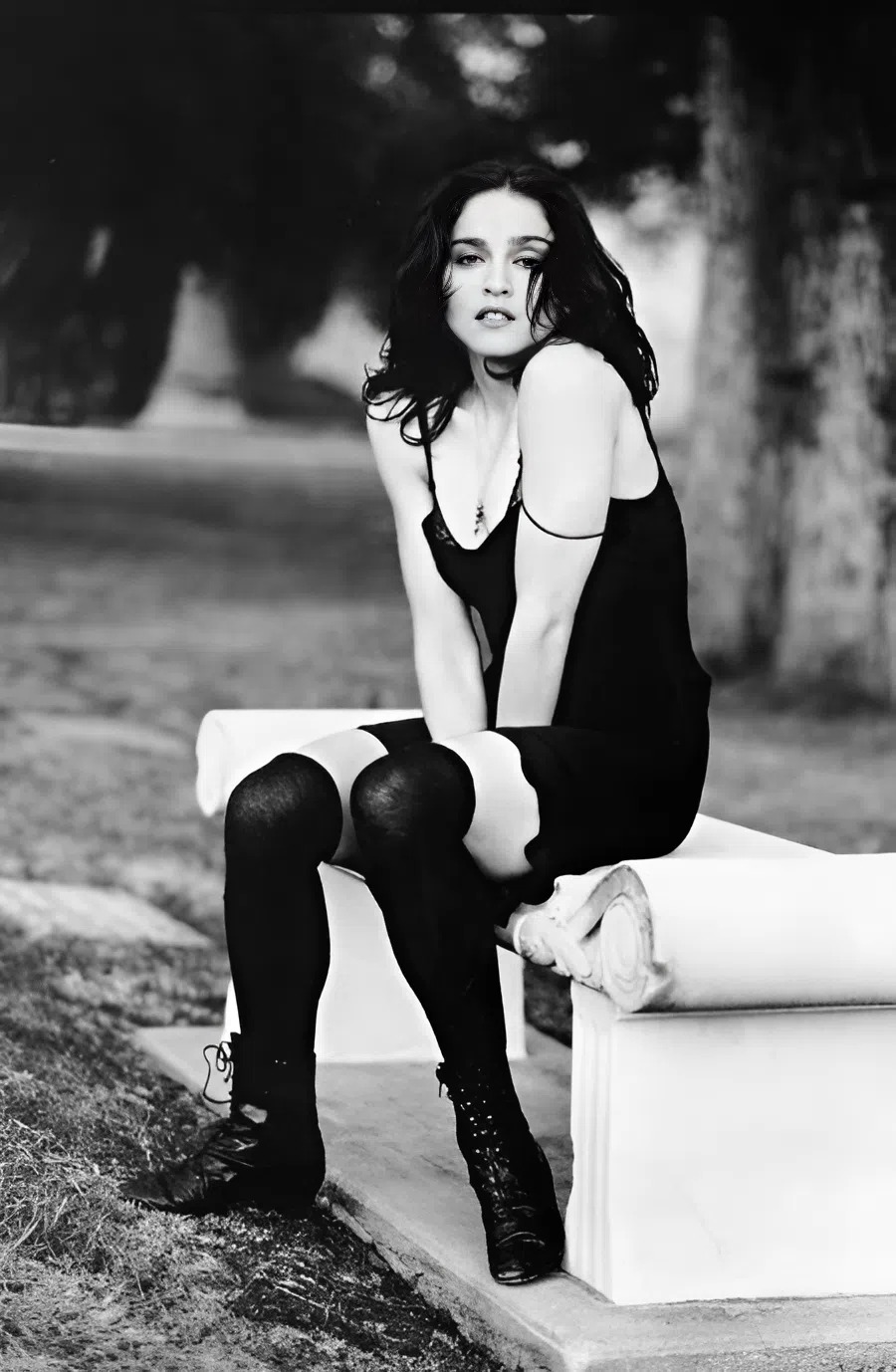
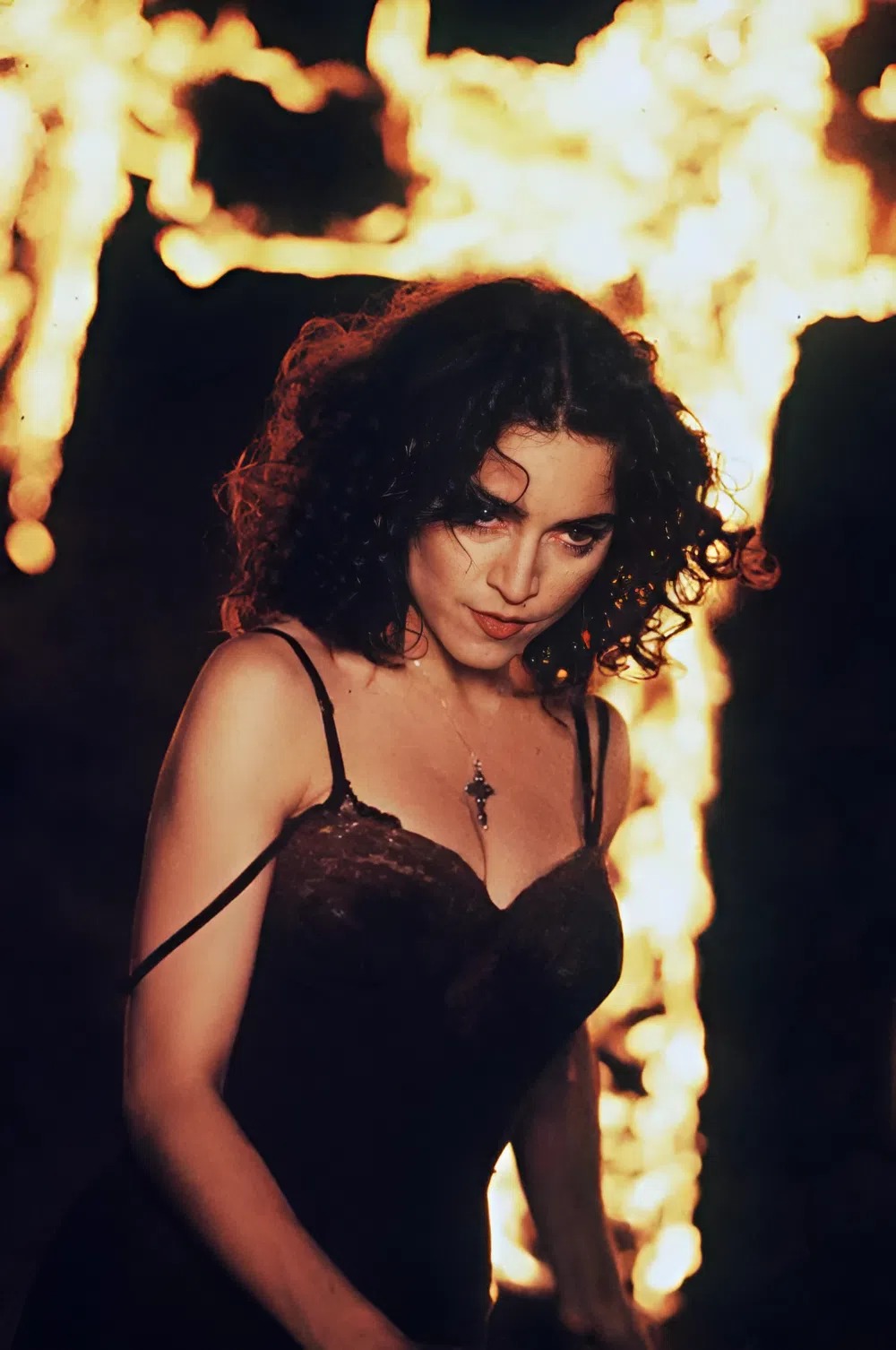
And, if the album’s conflicting themes of religion, feminine empowerment, sexual expression, and racial overtones—for better or for worse—didn’t signal a turning point in her craft, her concert tour sure ruffled international feathers.
Canada’s watchful police threatened arrest. Her Italian concert leg got cut short due to low ticket sales and labor union protests. Plus, Pope John Paul II’s conservative backlash didn’t do her any favors when Pepsi cancelled its tour sponsorship deal.
But in Madonna’s 90s world, provocation was very much business as usual. As Myers puts it, “Madonna [was] both leader and passenger, student and teacher, son and holy ghost.”
Madonna’s re-invented image and sophisticated sound not only complemented her album, but also positioned her as a fully-rounded, serious artist. As they say in Hollywood, there is no such thing as bad publicity, and at just 30 years old, Miss Ciccone already wore that sentiment as perfectly tailored as her signature crucifix.
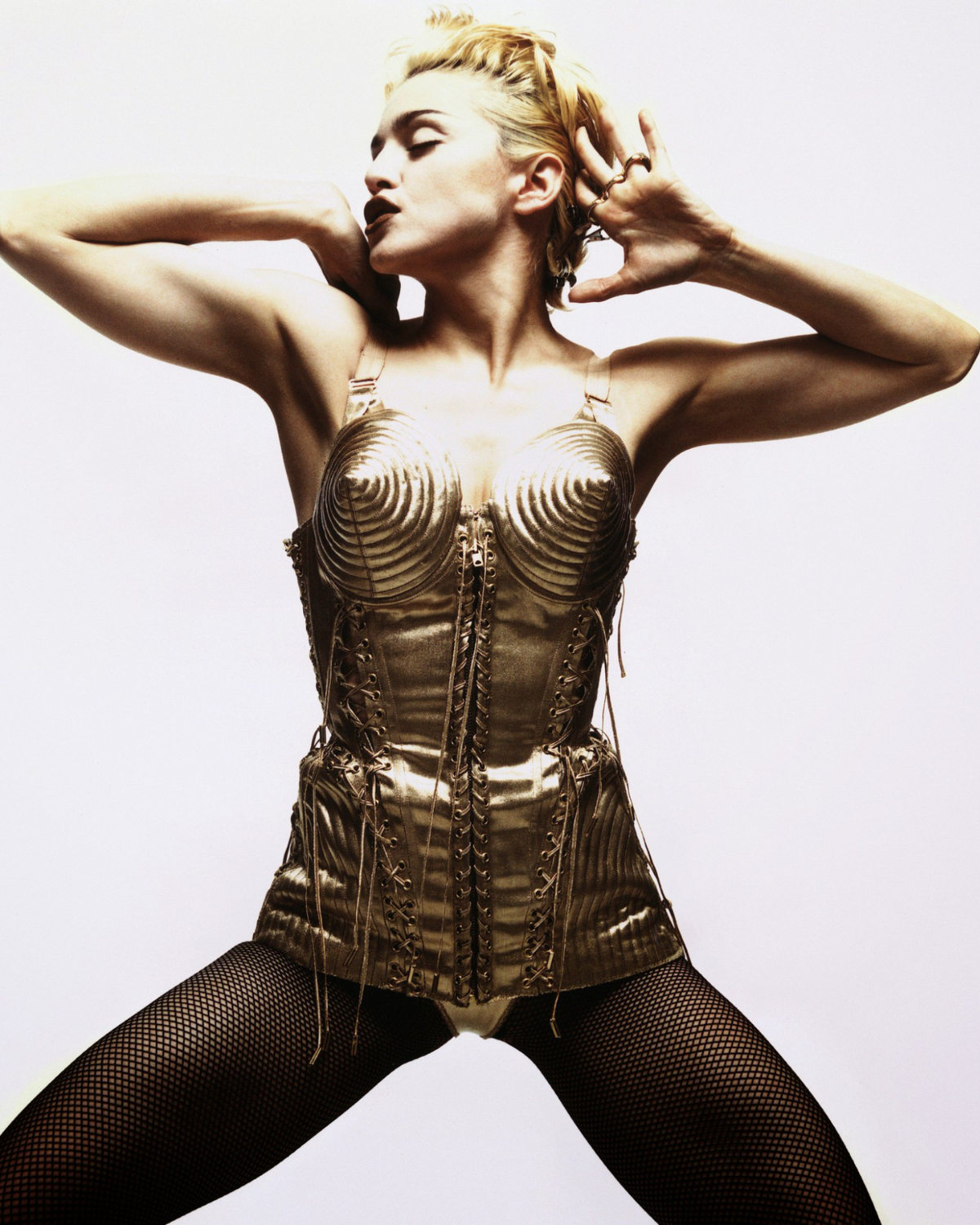
The April 13th concert in Chiba City not only marked the first out of fifty-seven sold-out shows across Asia, North America, and Europe. It didn’t just blend theatrical precision, performance art, and seduction into an award-winning production. Thirty-five years ago, Madonna’s infamous Blond Ambition cone bra earned her a biblical moment in fashion history.
Under her brother Christopher’s art direction, Madonna collaborated with French fashion designer Jean Paul Gaultier for the entirety of her tour’s wardrobe. Gaultier put together elaborate costumes for each Bond Ambition act, bridging campy Vaudeville getups with a Bob Fosse-inspired black outfits, a feathered mini-dress, a hot-pink dollar-signed number, and a clergyman’s robe, all with elements of lingerie, bondage, and gender fluidity seen throughout.
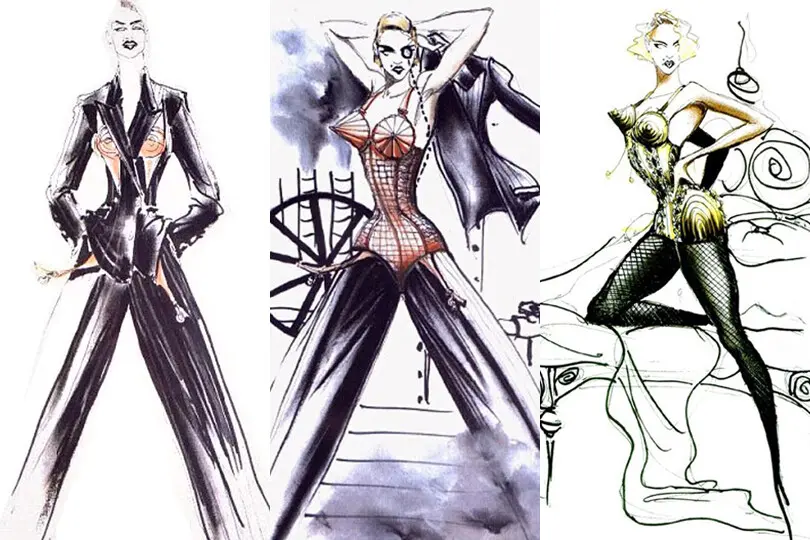
However, inside this whole Dick Tracy concoction, there’s a devilish silhouette that poked through.
Gaultier’s satin cone bra corsets for the tour pulled from 1950s bullet bras, the popular underwear-as-outerwear street style trend of the times, the singer’s Vogue music video, and his own velvety, pointy rendition of his Fall/Winter 1984 collection, Barbès. And let us not forget about the designer’s own teddy bear, Nana, for whom he designed a cone-shaped bra as a child growing up in suburban Paris.
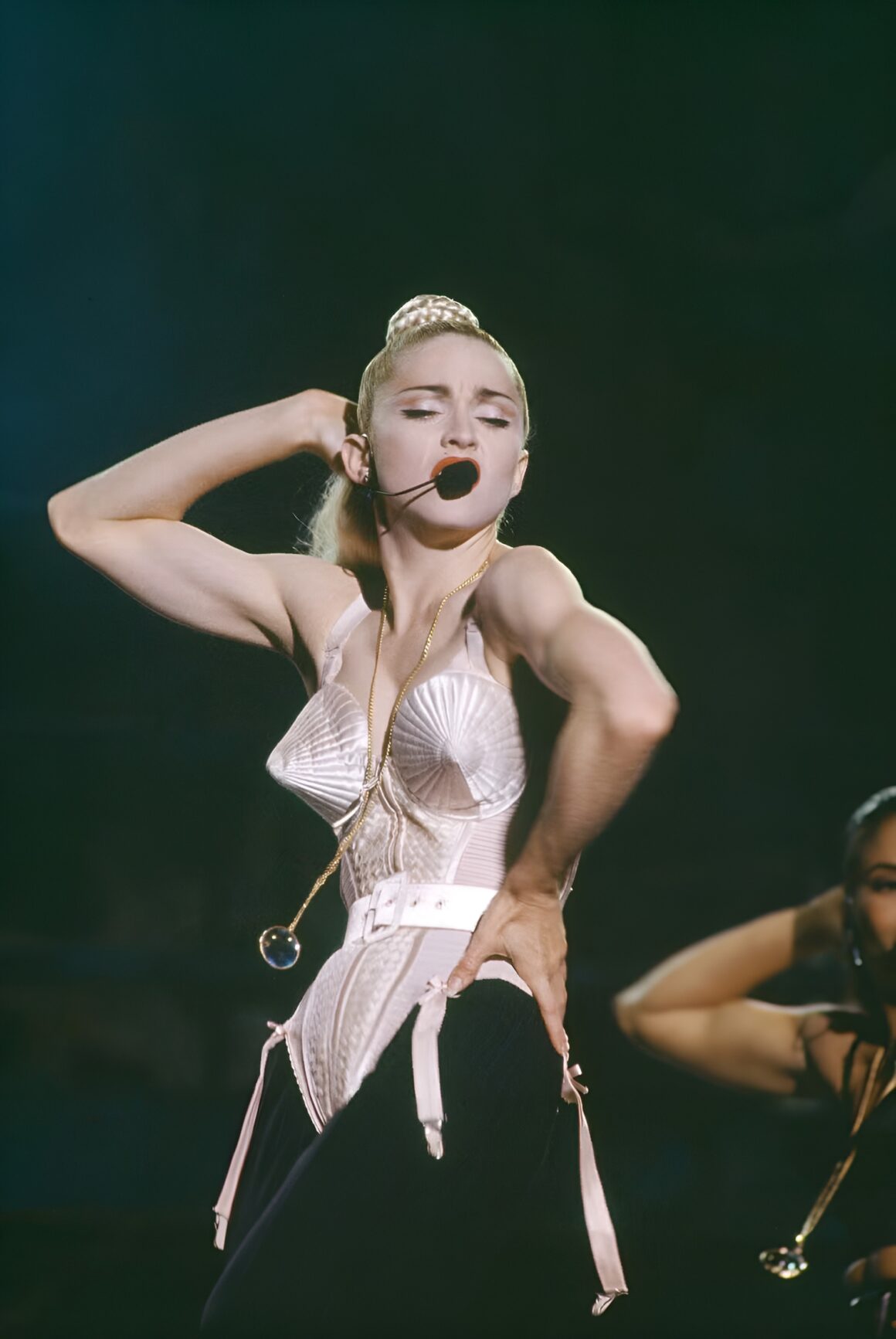
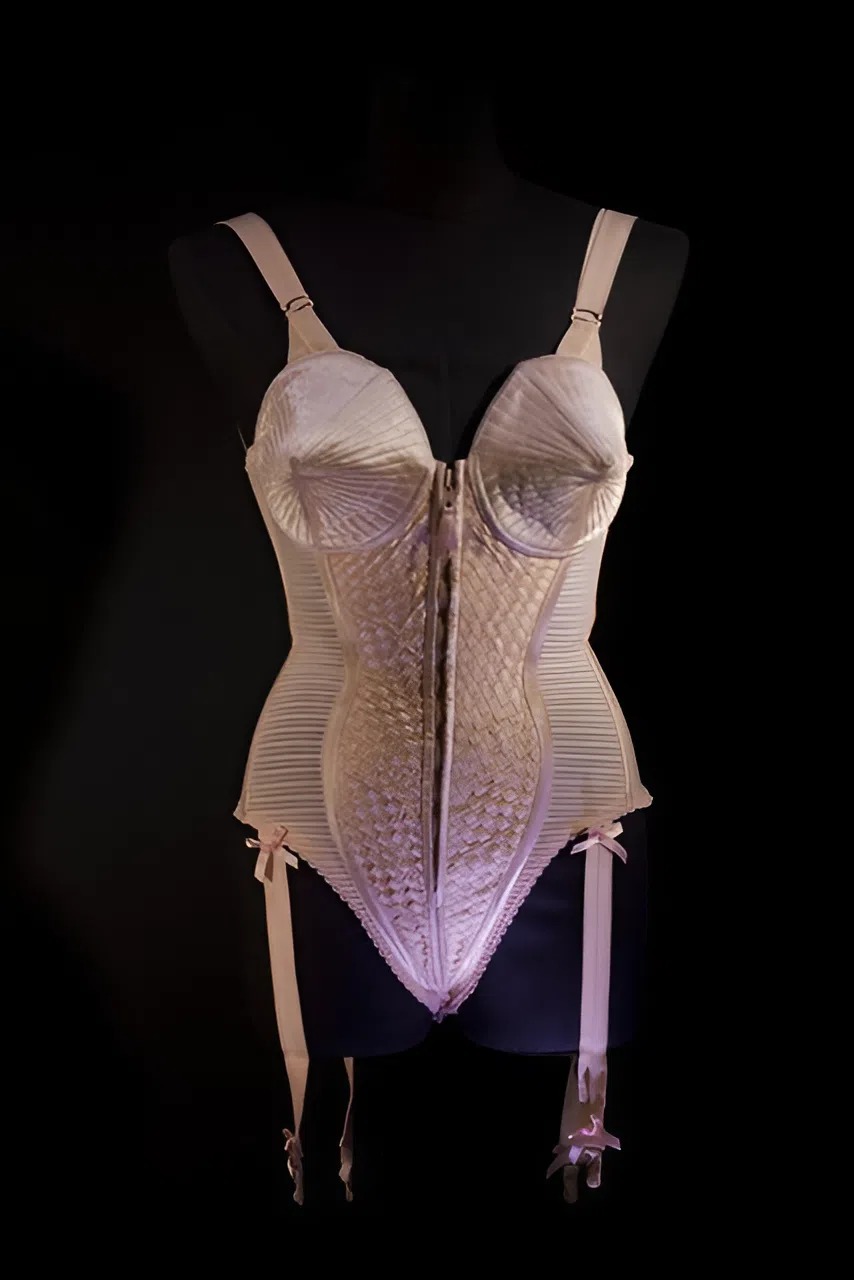
As it turns out, Madonna’s tour cone bra corsets paralleled her own course in modern culture, reclaiming an item of hidden feminine structure in history into a modern power piece in women’s fashion.
Featuring decorative stitching that stemmed from the nipples, Gaultier’s iconic cone bras were designed to be seen. Their countercultural essence broke outdated taboos in favor of new ones—especially in the US, where they may not have been seen were it not for this heavenly collaboration. They glorified Gaultier’s reputation as the ‘enfant terrible’ of Parisian fashion and shaped the wardrobes of Millennial pop stars, from Lady Gaga to Katy Perry.
By reclaiming an undergarment as the outfit itself, Madonna and Gaultier’s cone bra refused the reductive ideals of womanhood—even under the gaze of humanity’s highest in chief. That surely feels like flyin’.