Fifty years on, Mahogany (1975) demonstrates how Diana Ross’s style, beauty, and costuming sparked a lasting shift in fashion and culture.
Who was the first Black supermodel?
Discovered in Detroit by British fashion photographer David McCabe, Donyale Luna’s messy affair with fame was quickly facilitated through the transformative power of fashion and fabrication.
During Cannes ’73, Donyale Luna—née Peggy Ann Freeman—pitched her life story to Motown’s Berry Gordy. When Mahogany arrived in 1975, the high-glam, high-camp romance was, by Luna’s account, born of that idea.
Starring Berry Gordy’s equally magnetic muse Diana Ross, Mahogany charts the rags-to-riches rise of Chicagoan Tracy Chambers, an aspiring designer stuck in a thankless job as a department store assistant under the icy gaze of Miss Evans (Nina Foch). Tracy attends night courses to cultivate a career in design—until a chance encounter with Sean McAvoy (Anthony Perkins), a predatory international photographer, pulls her into his orbit.
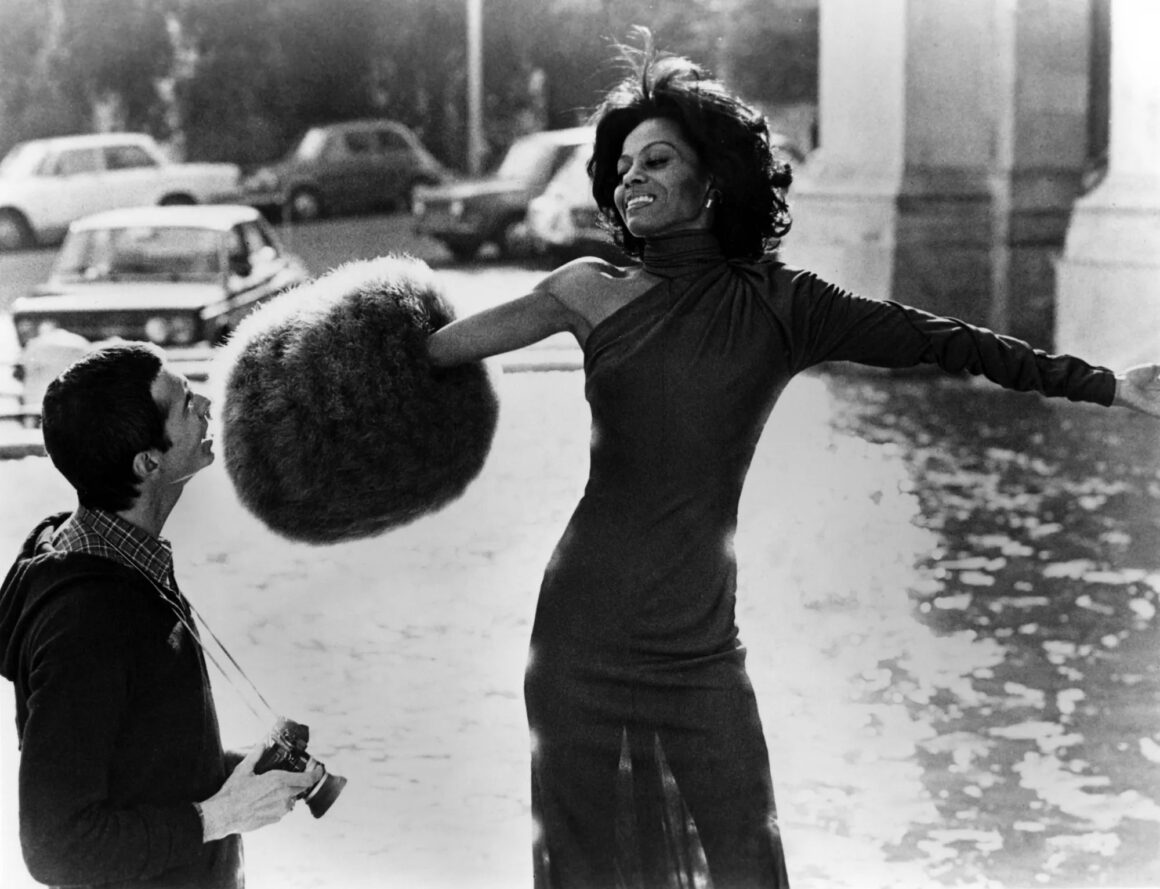
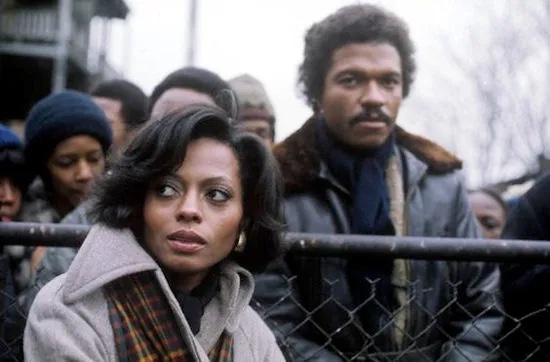
Tracy dates Brian Walker (Billy Dee Williams), a charismatic but self-absorbed alderman hopeful, yet the tug-of-war between love and ambition proves relentless. On the night of a campaign dinner, she chooses runway over romance, grabbing a cab to the airport and fleeing to Rome. There, McAvoy—and femme-fatale fashion executive Carlotta Gavina (Marisa Mell)—reinvent her as the titular “Mahogany,” thrusting her into high demand.
To the naked eye, a campy soap opera at the height of Blaxploitation, Mahogany offers insight into the transformative power of fashion. An ode to Black women’s ambition, the 1975 film reflected a pivotal era for Black talent on high fashion runways.
Motown’s leading lady, Diana Ross, was plucked from obscurity at Cass Technical High School, hailing from the same city as Luna. Ross’s upbringing wasn’t all that dissimilar from her character’s, having spent her adolescence in the rundown Brewster-Douglass Projects. After starting a girls’ group with friends, Ross impressed Gordy with her persistence and talent and became his star Supreme.
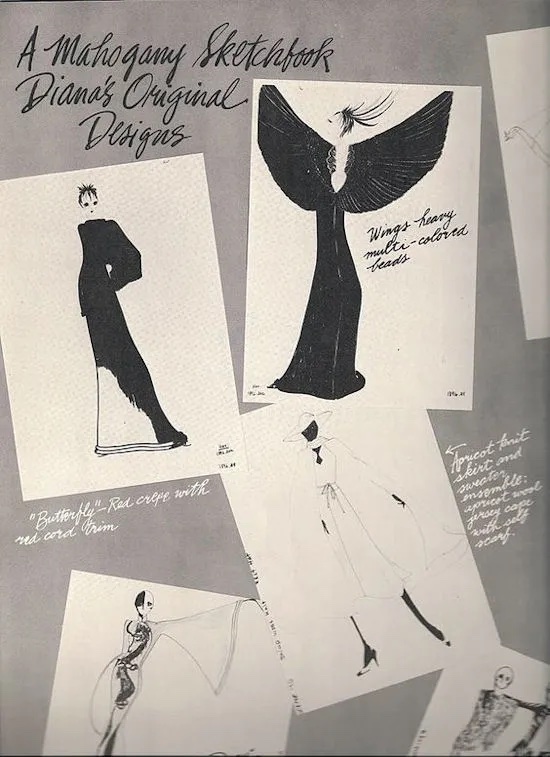
Ross’s musical pursuits overshadowed her long-held interest in fashion design. Strutting into the role of fashion director, Mahogany offered Ross the chance to fulfill those aspirations. Five years into her solo career, film and fashion provided Diana the stage to be a Black woman doing it all.
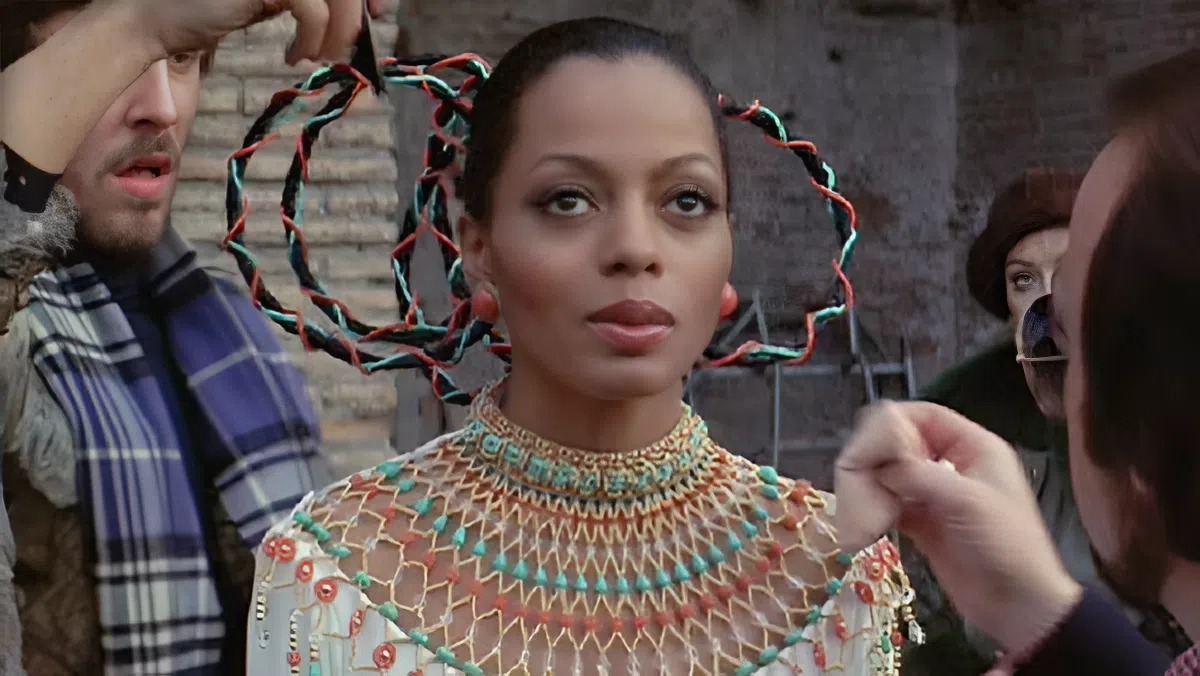
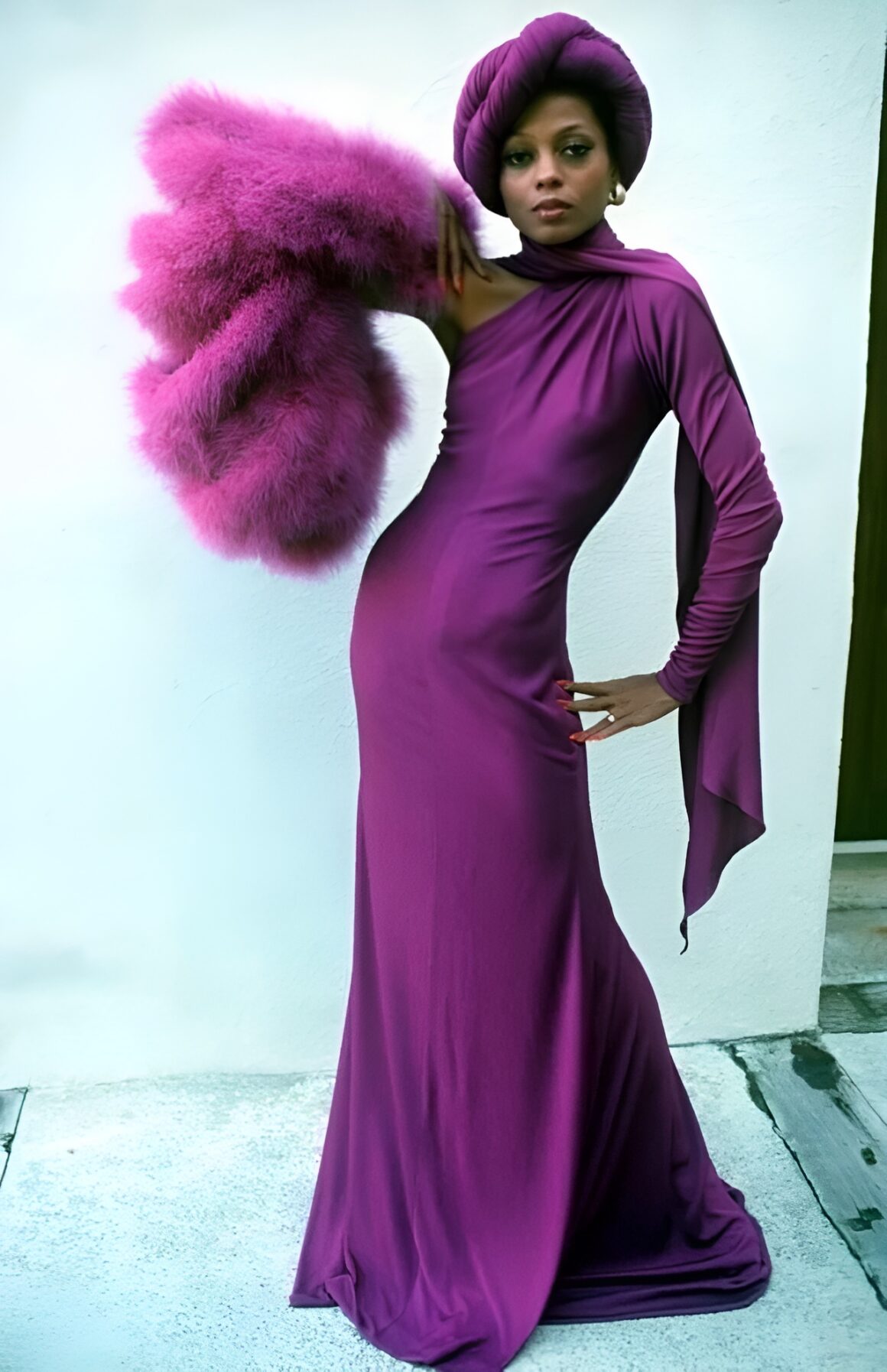
Breathing life into every garment, Ross is adorned with numerous styles, including tailored bright-white suits, a floor-length fuchsia gown (designed by Bob Mackie), and a showstopping Kabuki kimono.
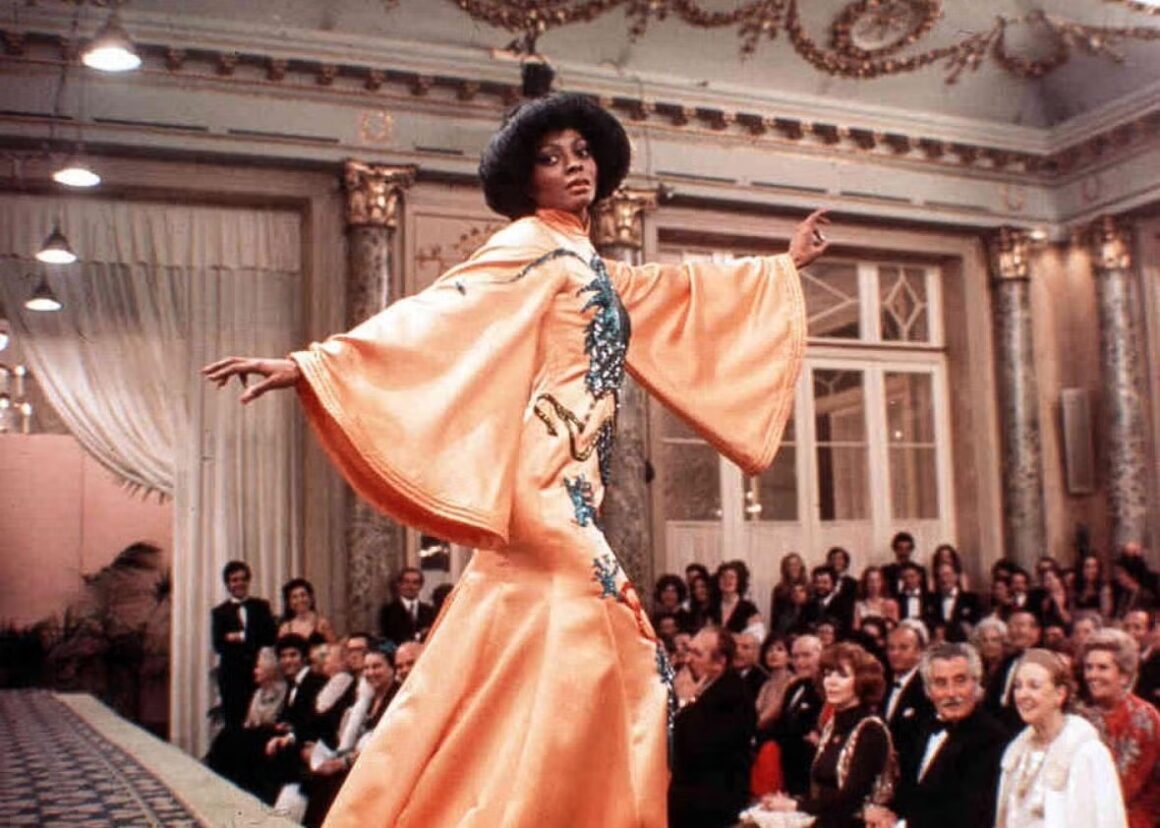
The gaudiness of Ross’s designs makes a striking entrance during a fashion charity show in Rome. Set to wear a tasteful Princess Irene Galitzine cocktail dress, Mahogany floats onto the runway donned in her own creation – an orange satin gown with a dragon embellished on the bodice. This kimono-inspired piece receives brutal reactions from the crowd, leaving Mahogany almost demoralized. She’s rescued by Count Christian Rosetti, who bids a flattering amount on her design. Despite uncertainty over her skill, this pivotal moment represents Mahogany’s debut as a trailblazer on the fashion scene.
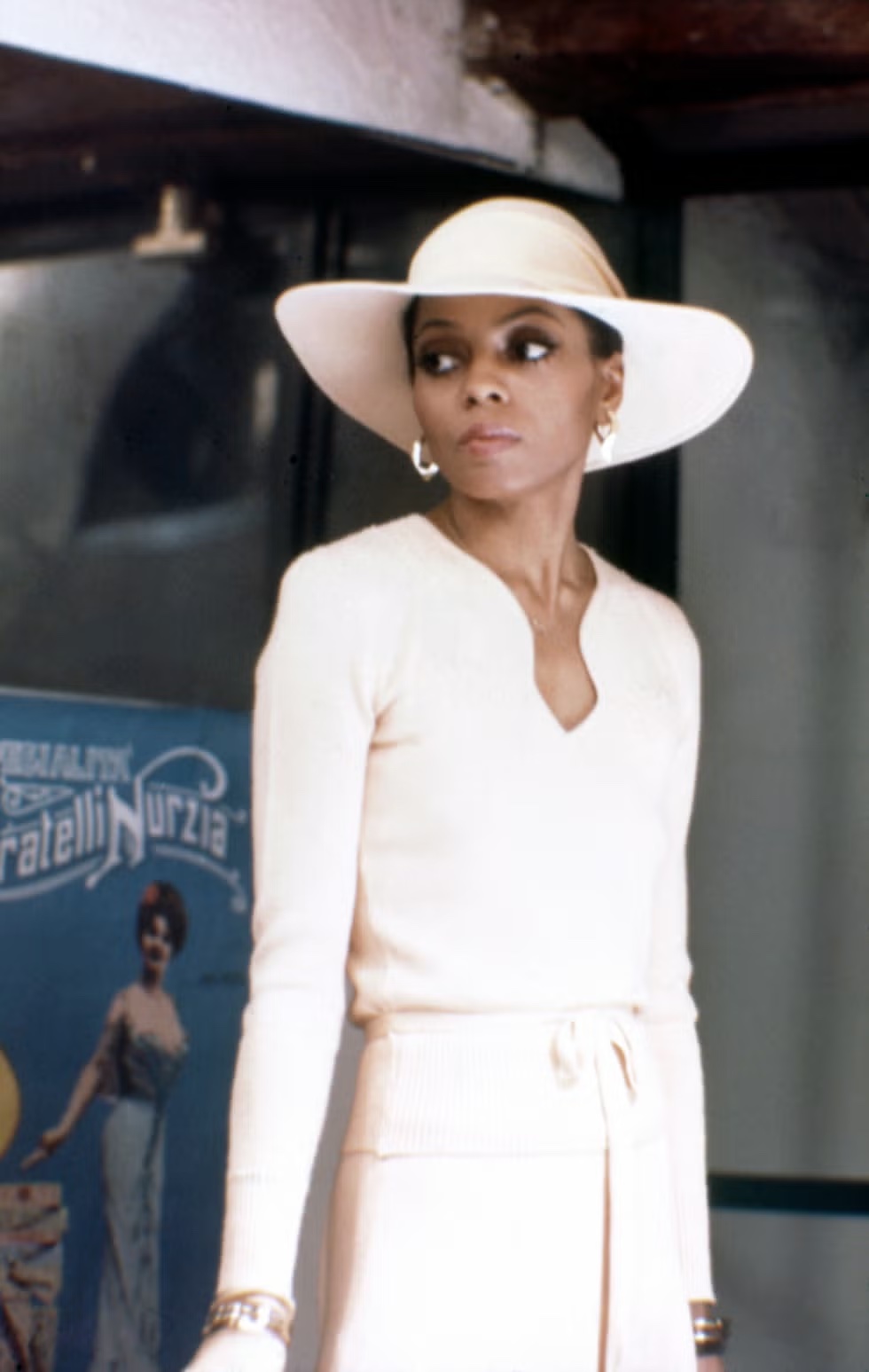
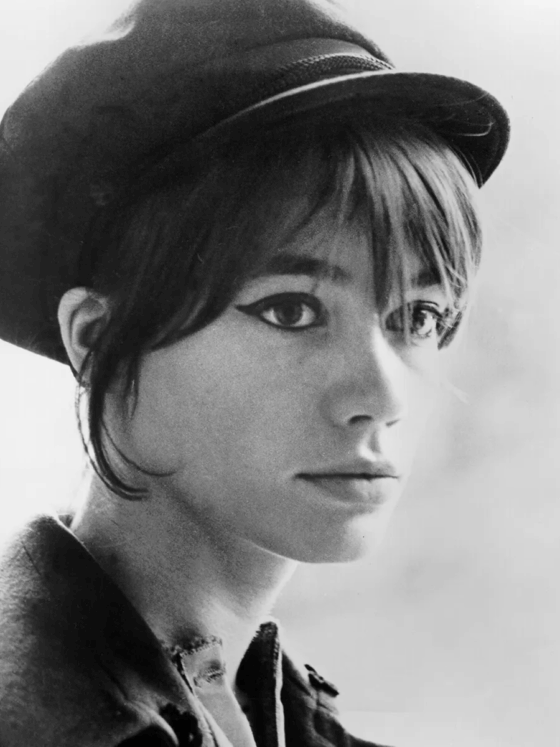
Tracy’s casual style, defined by bootcut jeans, knee-high leather boots, and wide-brim hats, ingeniously complements Mahogany’s flashy runway designs. Dressed for an important meeting, one of Tracy’s sketches leaps off the page into an ivory business skirt suit paired with a wide-brimmed hat of the same shade. Her choice of silver hoops refines this relatively simple ensemble. Her signature Twiggy-esque eye makeup attracts the attention of businesswoman Carlotta Gavina, who champions her star power despite the disapproval of her male colleagues.
Diana’s star power, Donyale’s story, and the magic of Mahogany forged a film with lasting relevance. In an era of celebrities and ordinary people alike embracing secondhand glamour, Ross’s incredible designs resonate with the nostalgia in vogue. Creativity through fashion is a form of resistance we use to define ourselves. Despite the endless trials and tribulations of Black womanhood, these icons taught us that there is power in determining one’s own future, in and outside the industry.