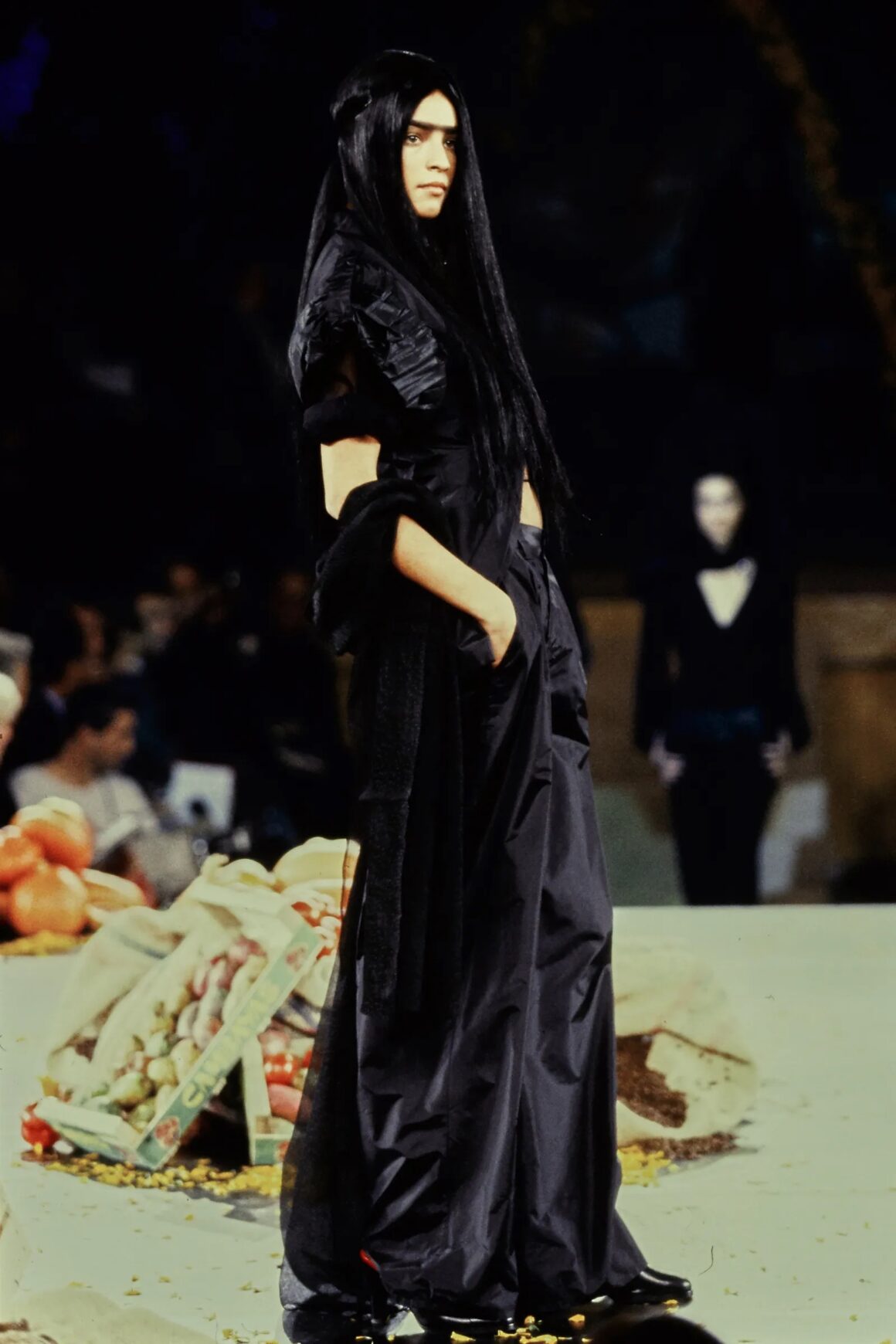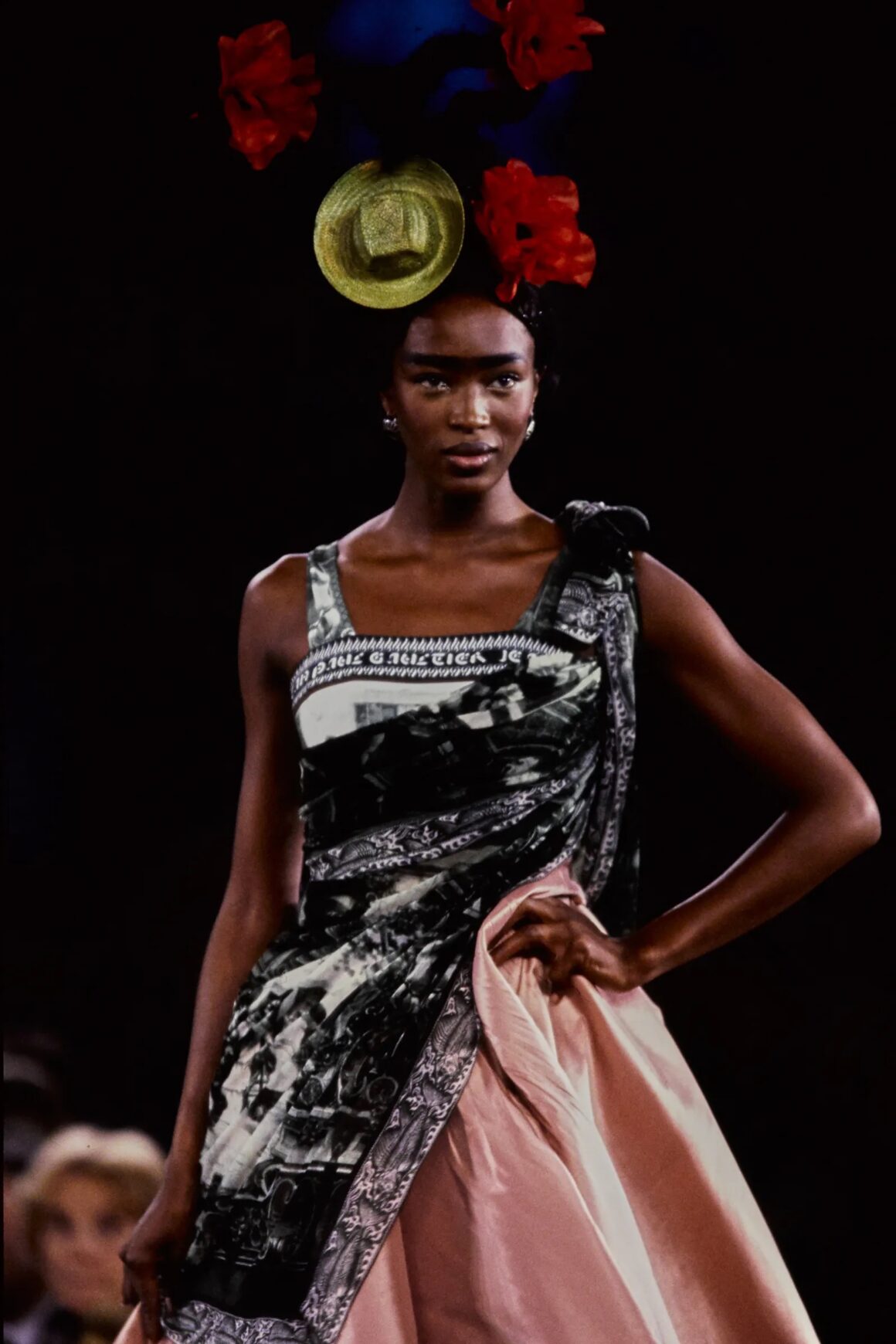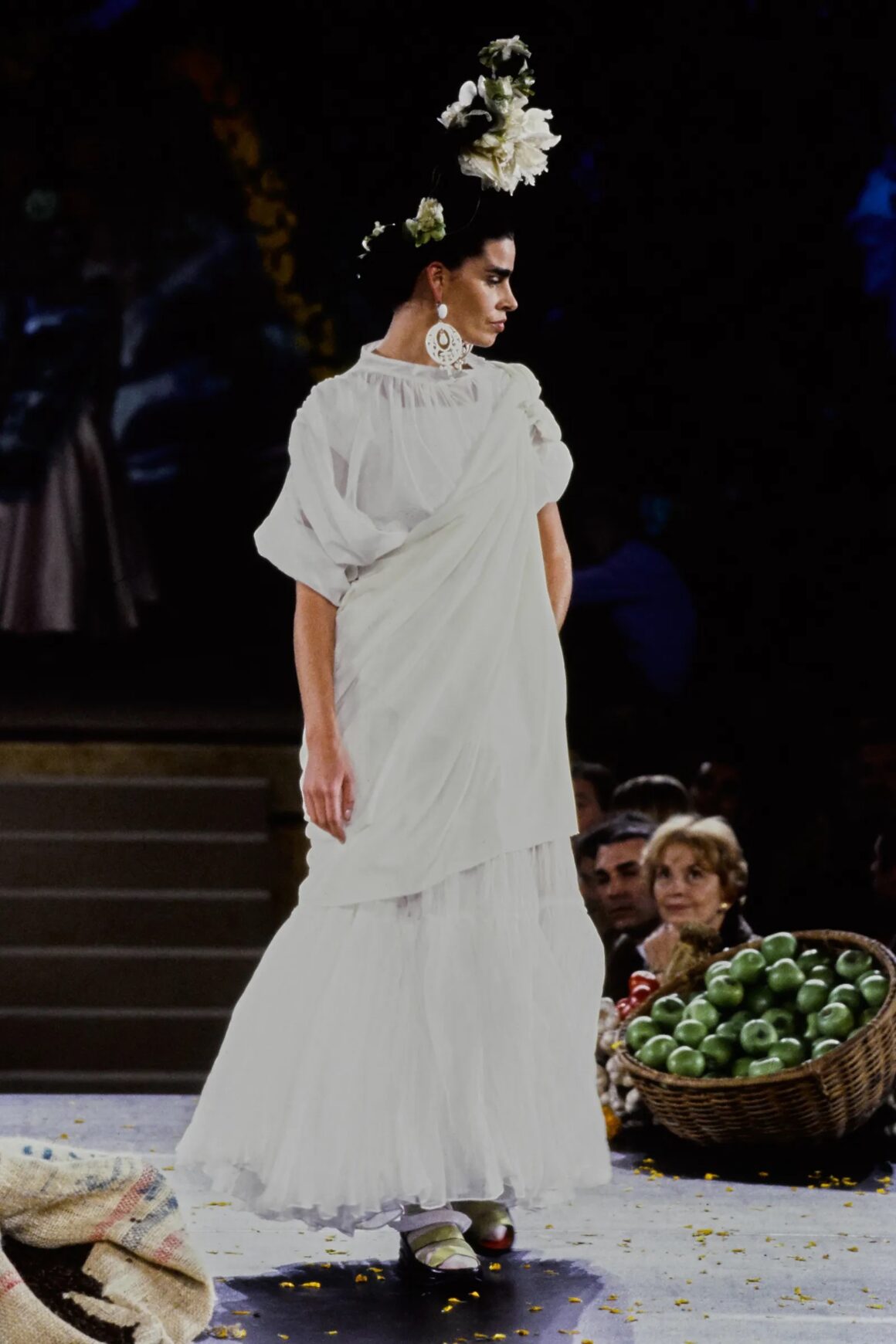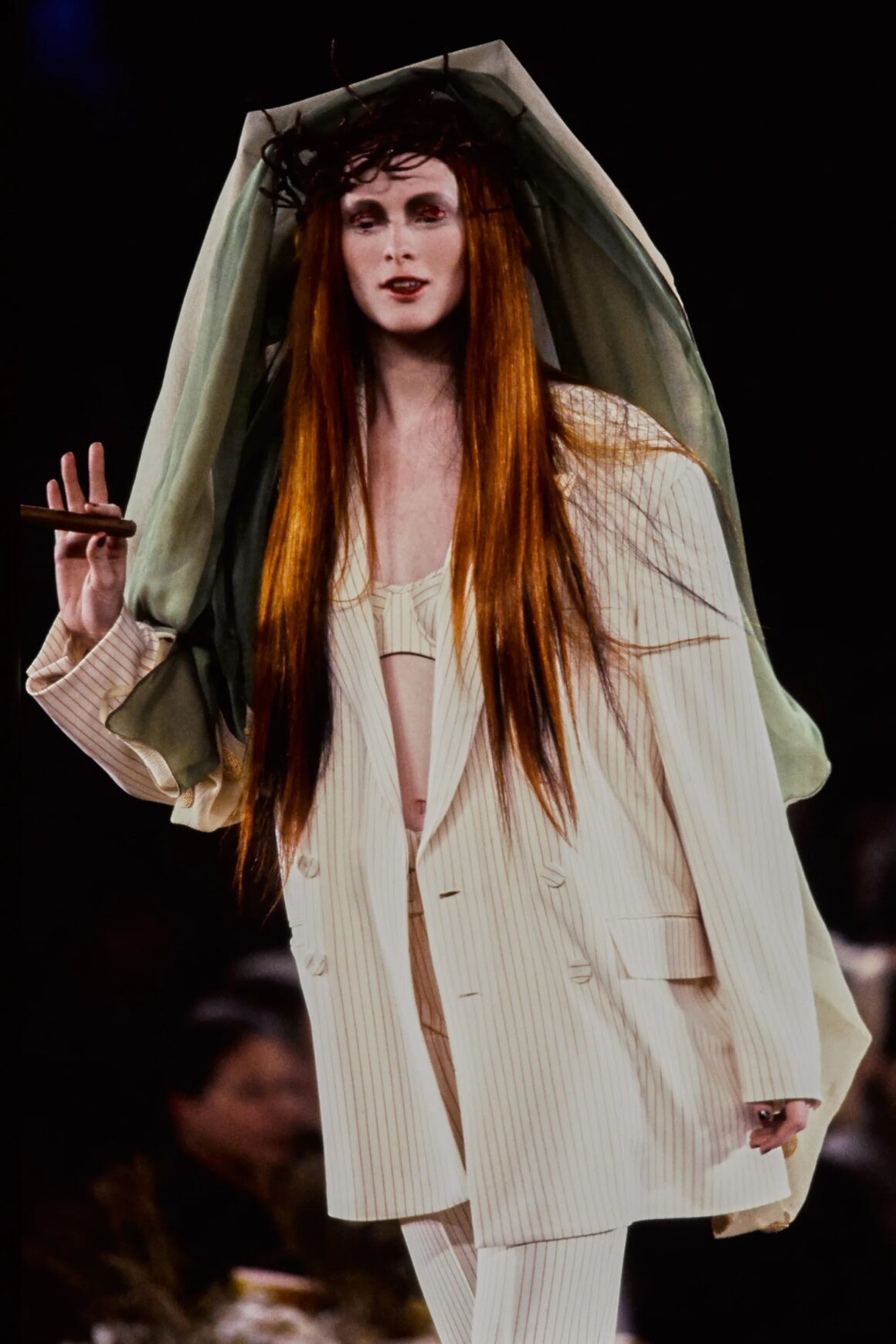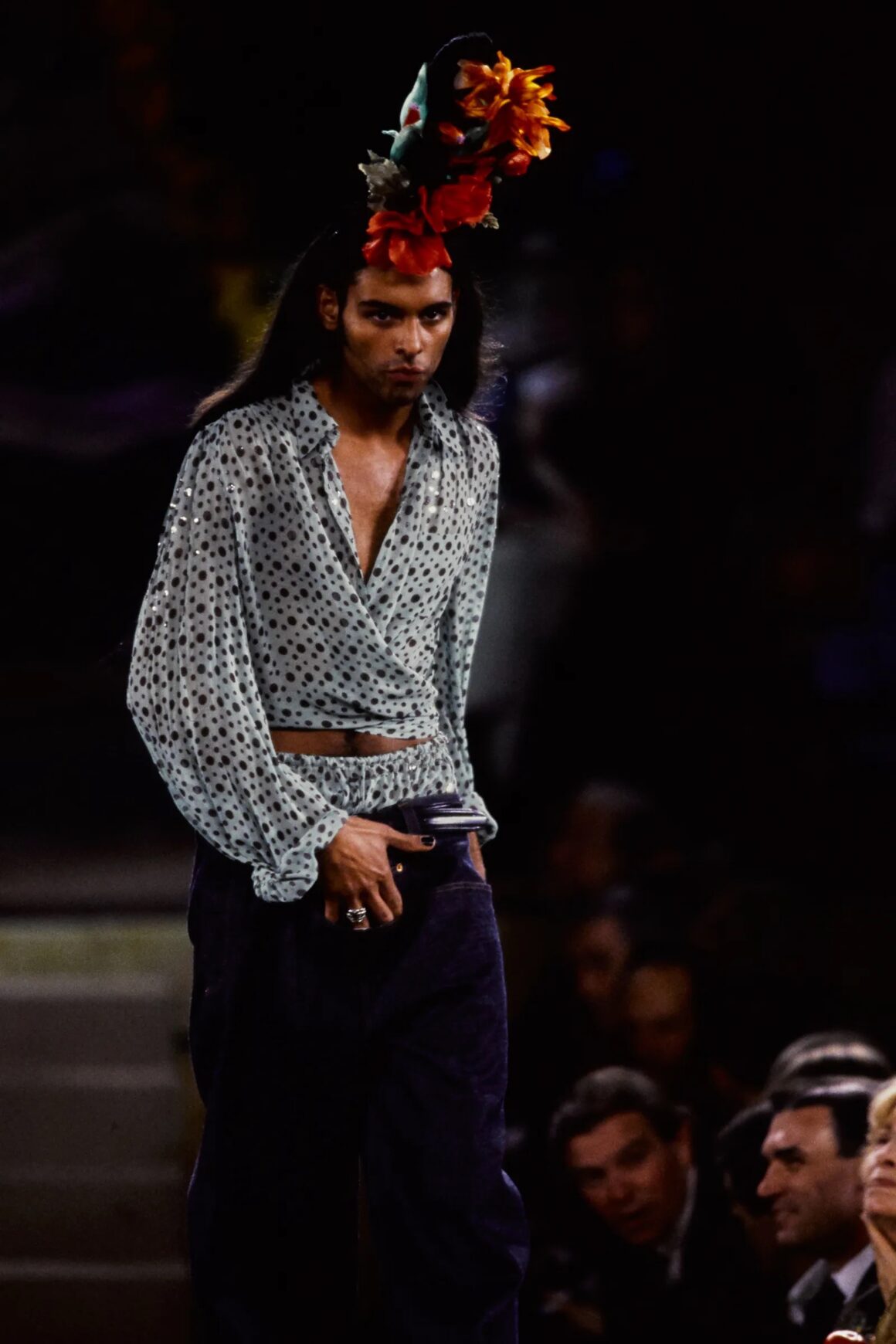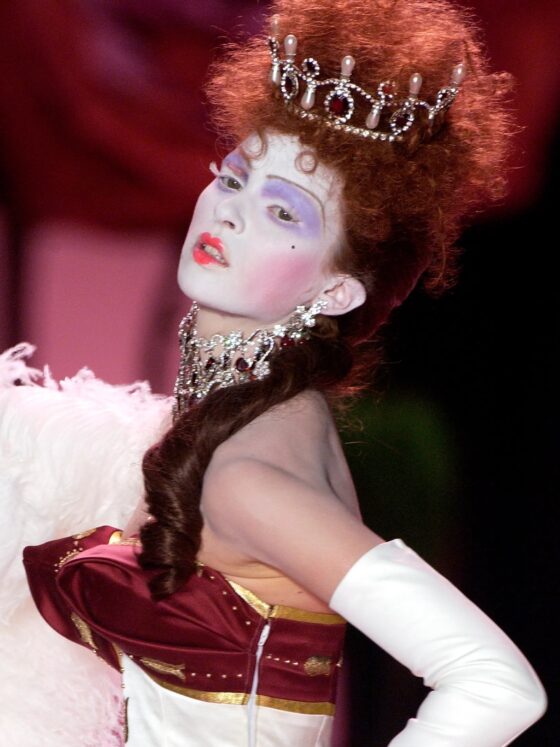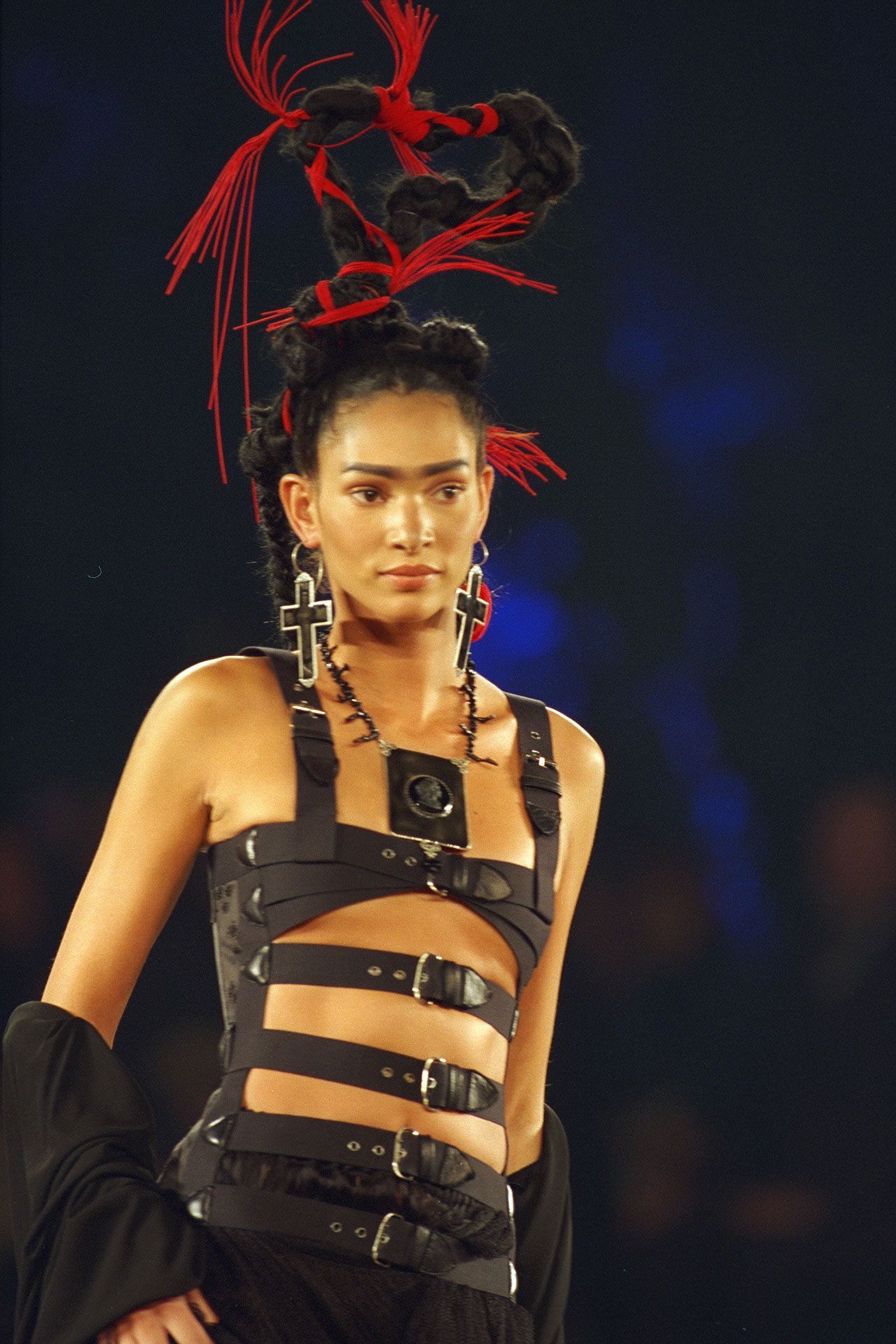
If one were to describe 1990s beauty trends using only one word, it would more than likely be “minimal.” However, when reflecting on the looks of the most popular starlets and models of the decade, it’s easy to see why. They were rarely seen with more than a brown lip and black eyeliner or, on the rare occasion, a very light wash of frosted eyeshadow. That’s why, when Jean Paul Gaultier unveiled his Spring/Summer 1998 collection, audiences were taken aback by the bold, vibrant makeup that accompanied each garment.
At its core, Gaultier’s S/S 1998 show was an homage to the celebrated Mexican artist Frida Kahlo. Kahlo, who gained prominence in the latter half of the 20th century following her passing, is perhaps most well-known for her surrealist self-portraits and landscapes. Her works primarily explore questions of postcolonialism, gender, identity, and race in Mexican society through the lens of folk art.
In the 1990s, she achieved great notoriety among political activists, who pushed her works to the forefront of their movements as emblems for their respective causes. In particular, her paintings deeply resonated with those in the feminist and LGBTQ+ movements, who came to view her as an icon.
It came as no surprise then that, as a result of Kahlo’s growing fame in the 1990s, those in the fashion space would begin to reference her as well. Yet, Gaultier’s interpretation of her legacy, through the beauty in his 1998 show, was striking nonetheless, as it so boldly contradicted the visual trends of the time.
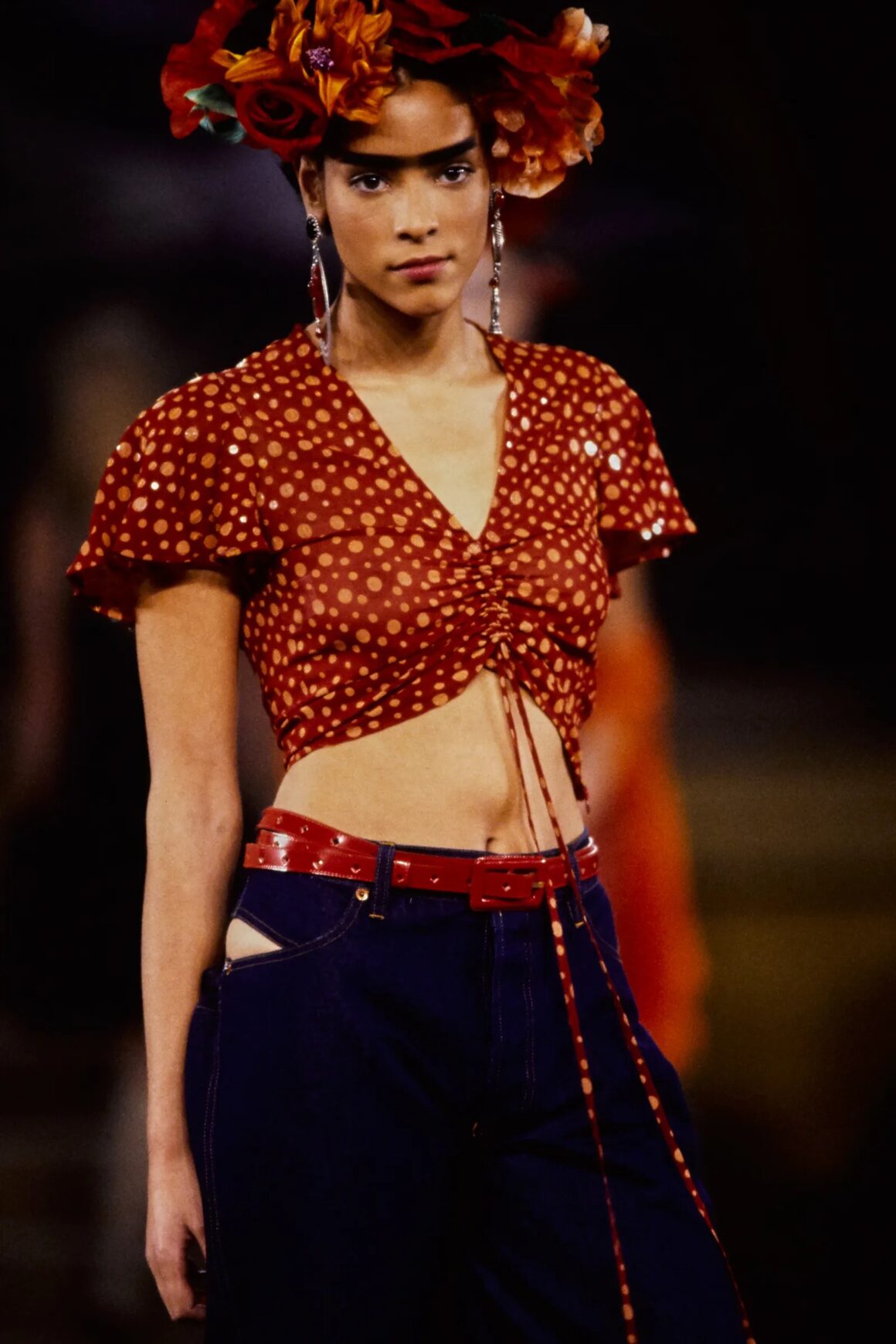
With his makeup and hair choices, Gaultier paid homage to both Kahlo’s distinct physical appearance in her self-portraits and the whimsical nature of her landscapes. In terms of the former, he sent several models down the runway with dark, thick brows and, on a few occasions, even a unibrow. Others donned deep red lipstick and significant black smokey eyes. This stood in direct contrast to the ultra-thin brows, nude lips, and minimal eye makeup that dominated the aesthetics of the decade.
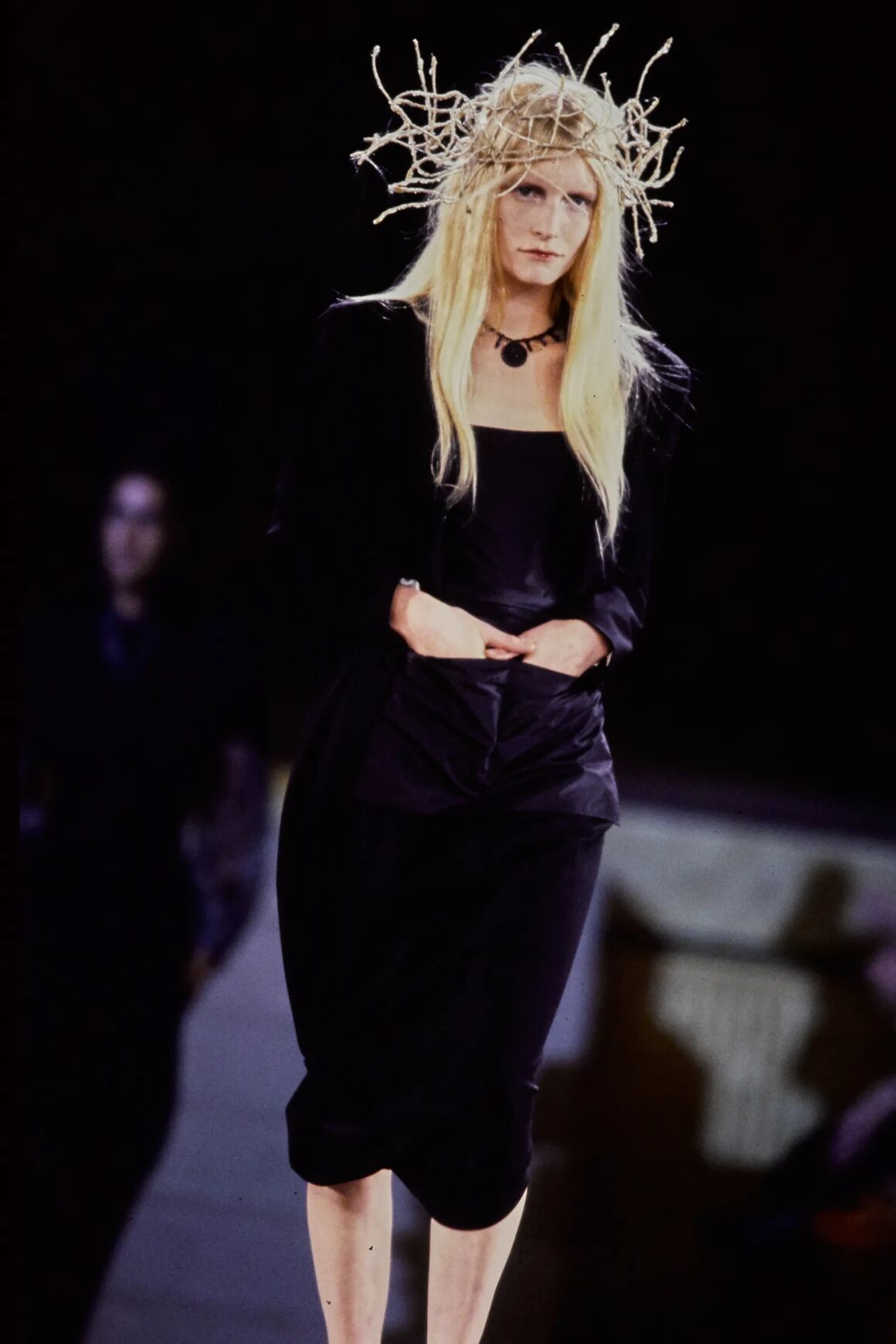
With his models’ hair, he took a far more dramatic and sculptural approach than his contemporaries, who often opted for simple French twists or straightened hair. Specifically, many models wore sizable braided updos, which no doubt referenced Kahlo’s own intricate hairstyles in her self-portraits. Others had large flowers woven into their braids or voluminous, thorny headpieces pinned on top, evoking the dynamism of the artist’s surreal, twisting landscapes.
The largely minimalist beauty aesthetic of the 1990s was, in and of itself, a subtle protest. In rejecting the maximalist, ostentatious styles of the 1980s, the youth, creatives, and tastemakers of the time rejected the ideals of the decade prior in an attempt to set a new standard for both themselves and the world.
By using bold makeup and hairstyles in his 1998 show, Gaultier was far from reverting to the 1980s. Rather, by exploring maximalism through the lens of Frida Kahlo, he not only shocked his contemporaries but seemingly found a new way to honor the activism of the 1990s. Simply put, he chose to make Kahlo his visual muse and, in doing so, bolstered the messages and themes that she explored in her paintings, as well as those of the decade’s activists.