With some of the greatest visuals of the legendary Galliano-McGrath partnership, the Dior F/W 2004 Couture runway exuded maximalism not only through the clothes, but through the glam as well.
Beauty can make or break a fashion show. More specifically, strong beauty curation can go a long way in elevating a designer’s vision. It can seamlessly play off the clothing, transforming the models into characters and making viewers feel as though they are being welcomed into a different world. In all of fashion, there is perhaps no designer who recognized this fact more than John Galliano.
During his iconic tenure at Dior, Galliano often employed the services of the acclaimed makeup artist Pat McGrath. After meeting in London as club kids in the 1980s, Galliano and McGrath began a decades-long partnership that transformed runway presentations forever. By creating makeup looks that not only corresponded to the theme of the clothing but also equalled the garments in their ostentation, the duo imbued the fashion show setting with an enhanced sense of theatricality. Since Galliano’s time at Dior, this heightened drama has become the stuff of legend, making both icons of their craft.
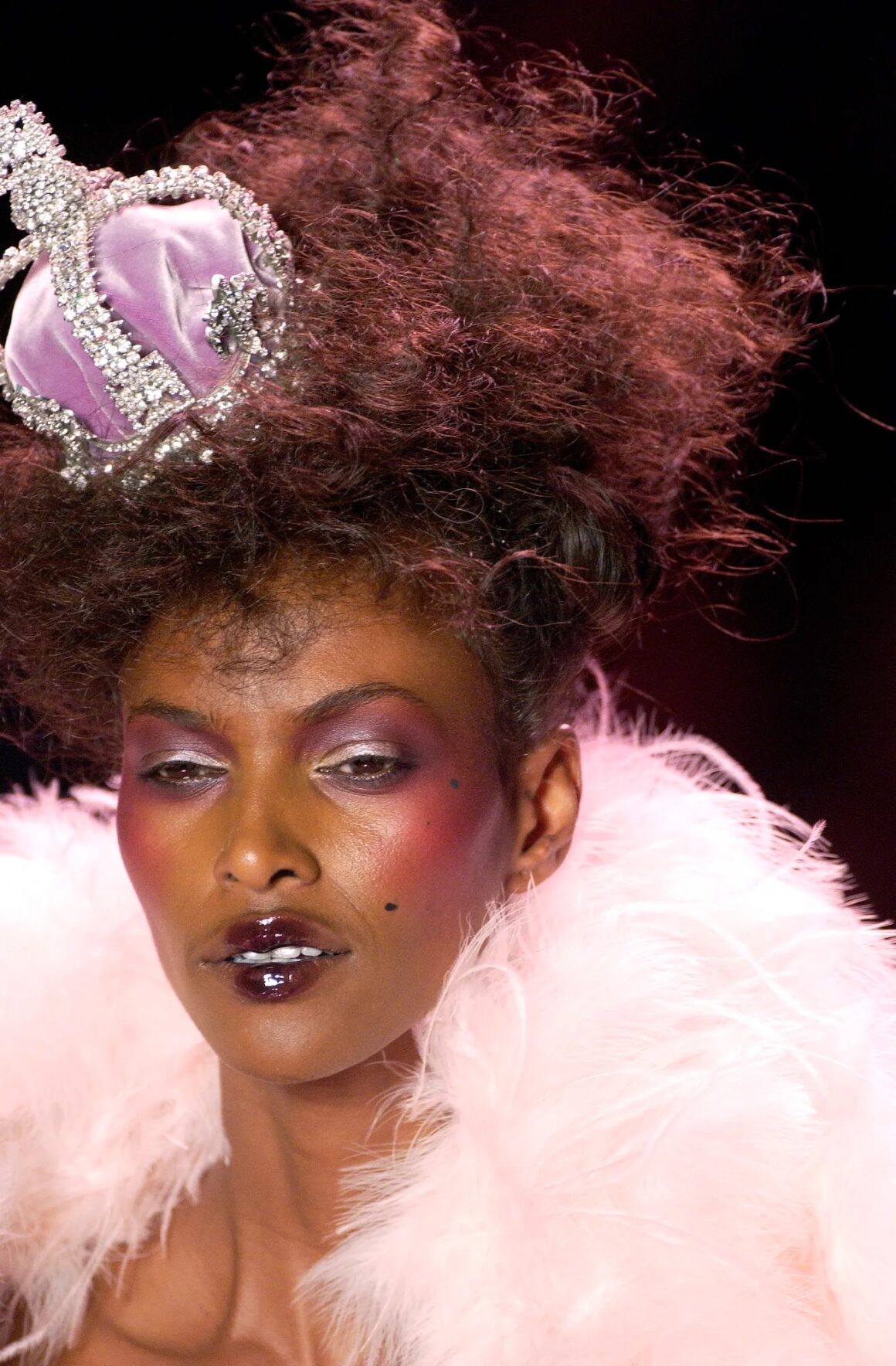
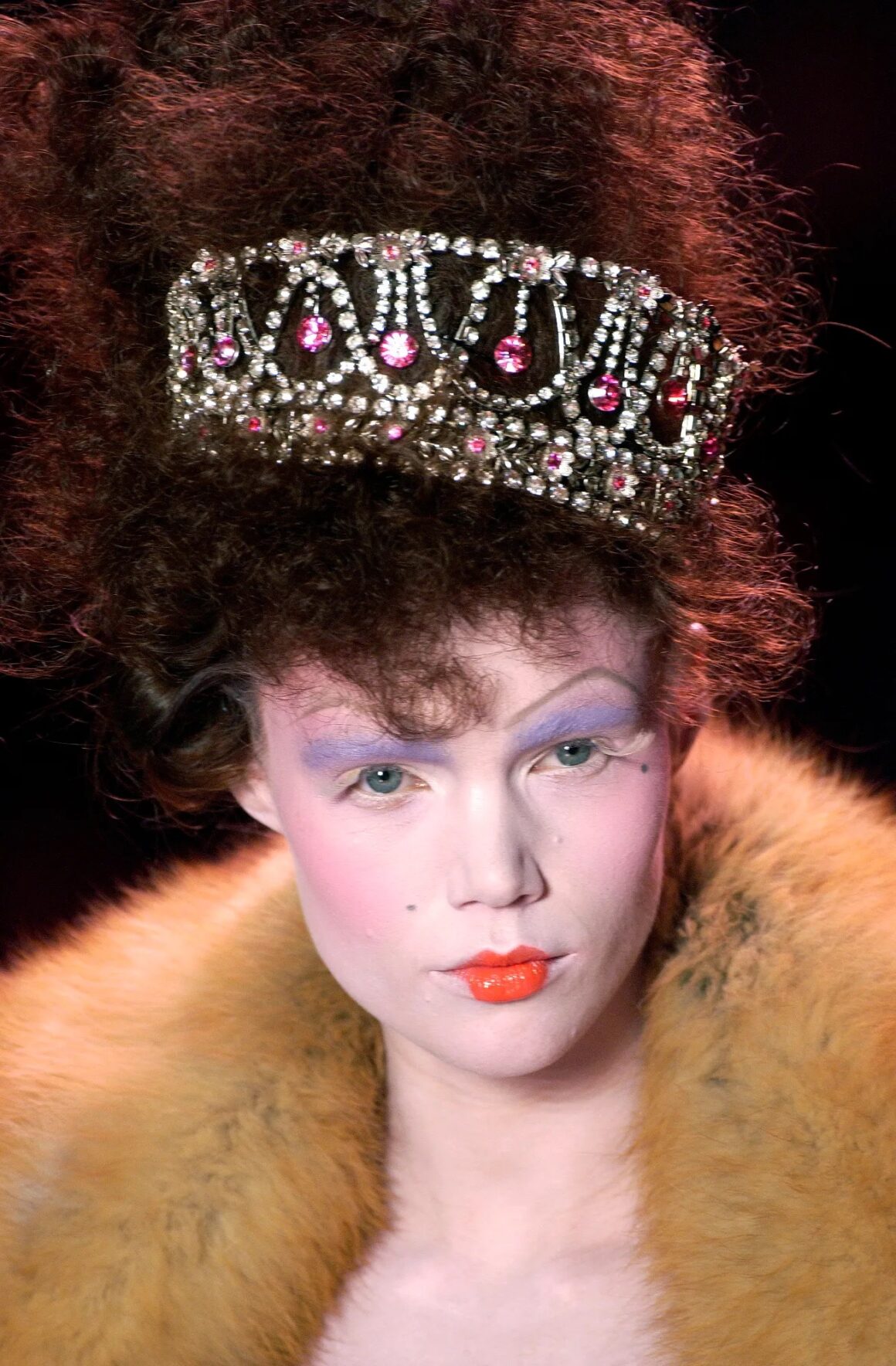
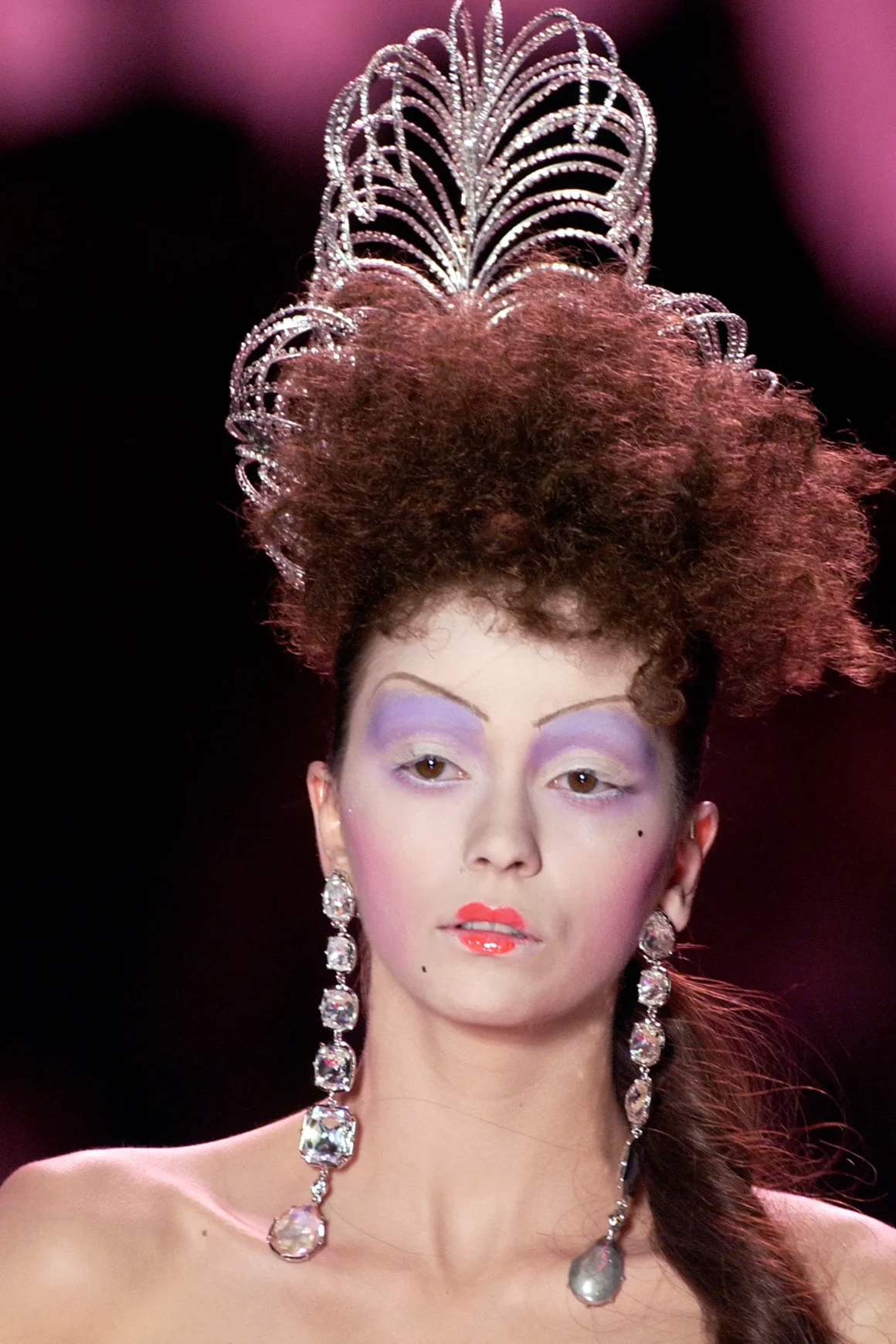
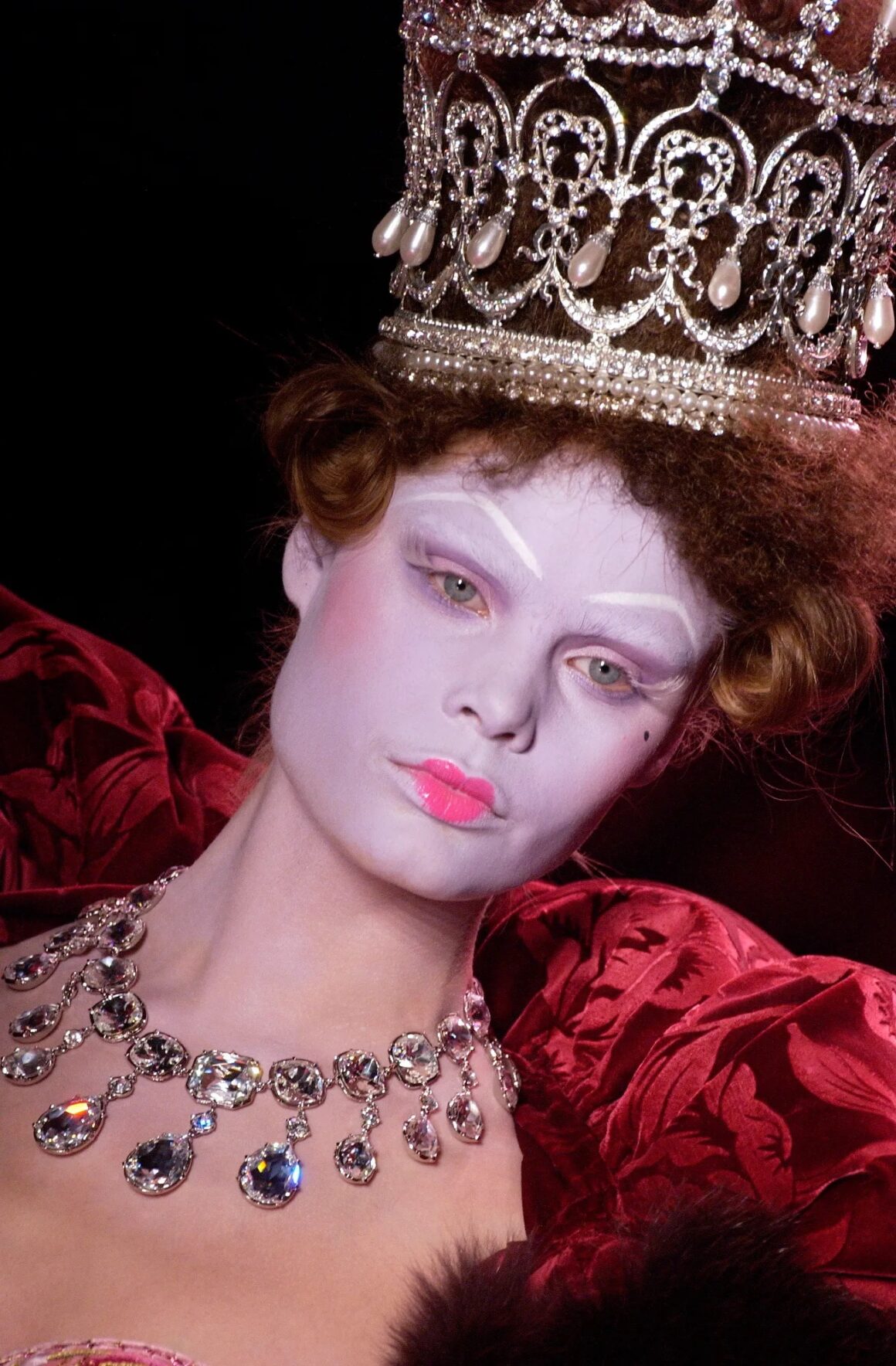
Perhaps one of the prime examples of McGrath and Galliano’s joint genius at work is in the Fall/Winter 2004 Dior Haute Couture show. As with past seasons, Galliano presented a collection that was as over-the-top as it was glamorous. However, for this show’s inspiration, he specifically looked to the famed and tragic Empress Sisi of Austria.
Empress Sisi, whose real name was Elizabeth, was Empress of Austria and Queen of Hungary from 1854 until her assassination in 1898. She was renowned for her style and beauty, with her most distinguishing feature being her thick, chestnut-colored hair, which allegedly grew down to her feet. Despite the court’s admiration of her looks, she found Habsburg royal life to be suffocating. She became obsessively concerned with maintaining her appearance, developing an eating disorder, and wearing extremely tight corsets to keep her waist at a minute 16 inches.
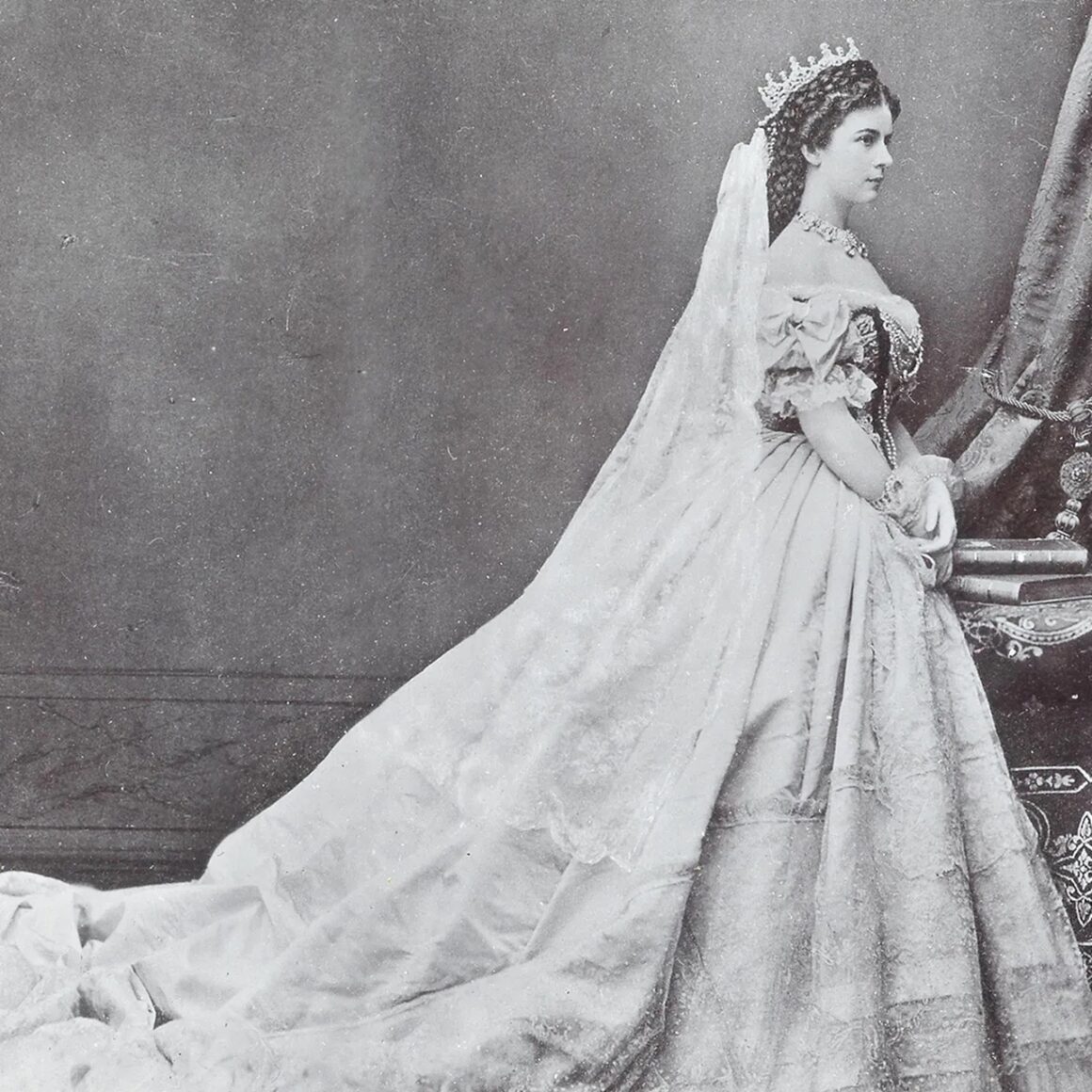
In paying homage to the famed empress, Galliano leaned into the opulence of the 19th-century Viennese court. The gowns featured massive skirt flounces and extreme ornamentation, being adorned with heavy crystal embellishments, gilded hand-painted details, and fluffy furs.
Referencing Sisi’s fixation on her appearance and, perhaps even the discomfort it caused her, the dresses were all fitted with corsets, and the models were all made to wear six-inch platform heels. Many struggled to move under the sheer restrictiveness of the dresses, with Karolina Kurkova even getting stuck in the runway’s exit.
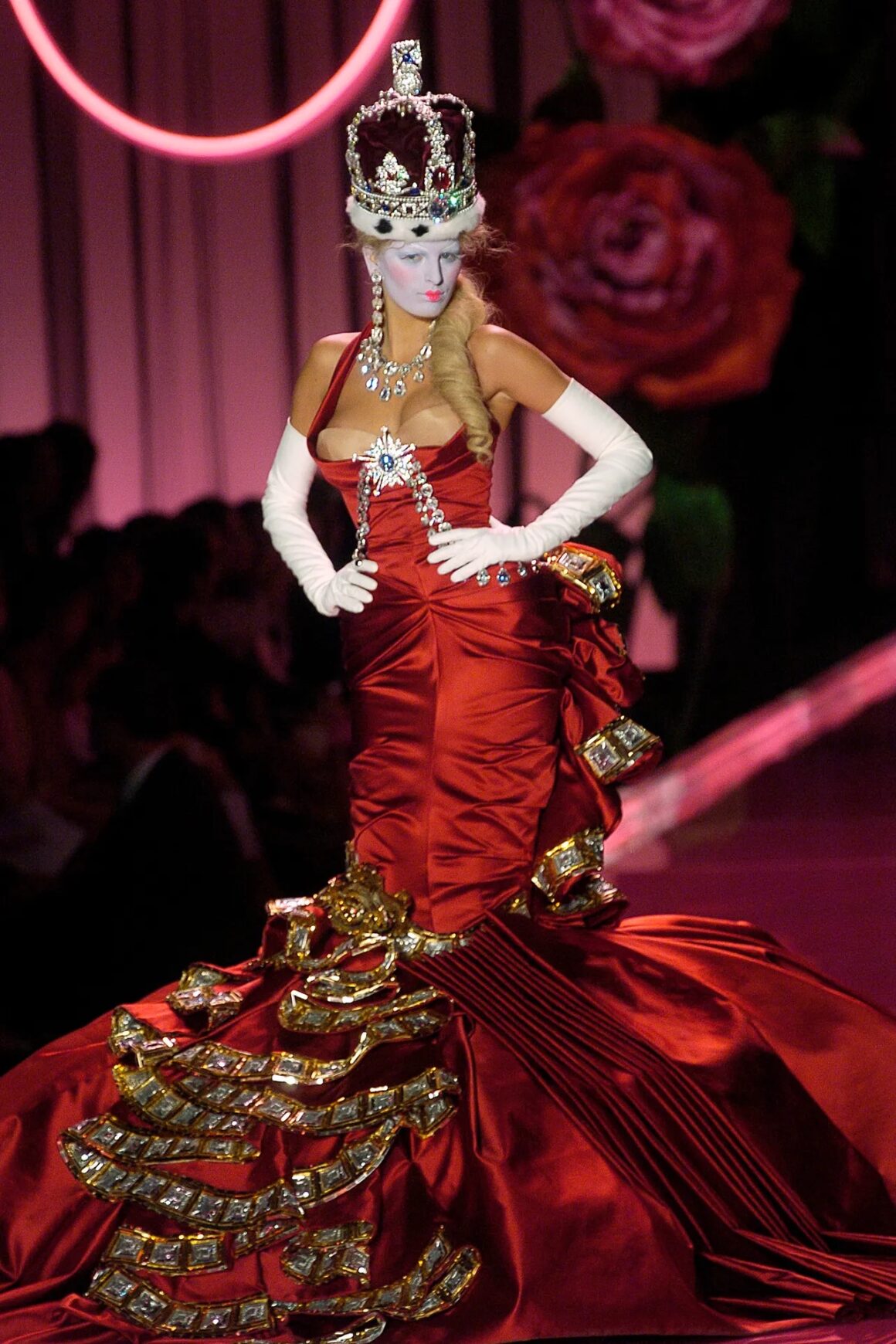
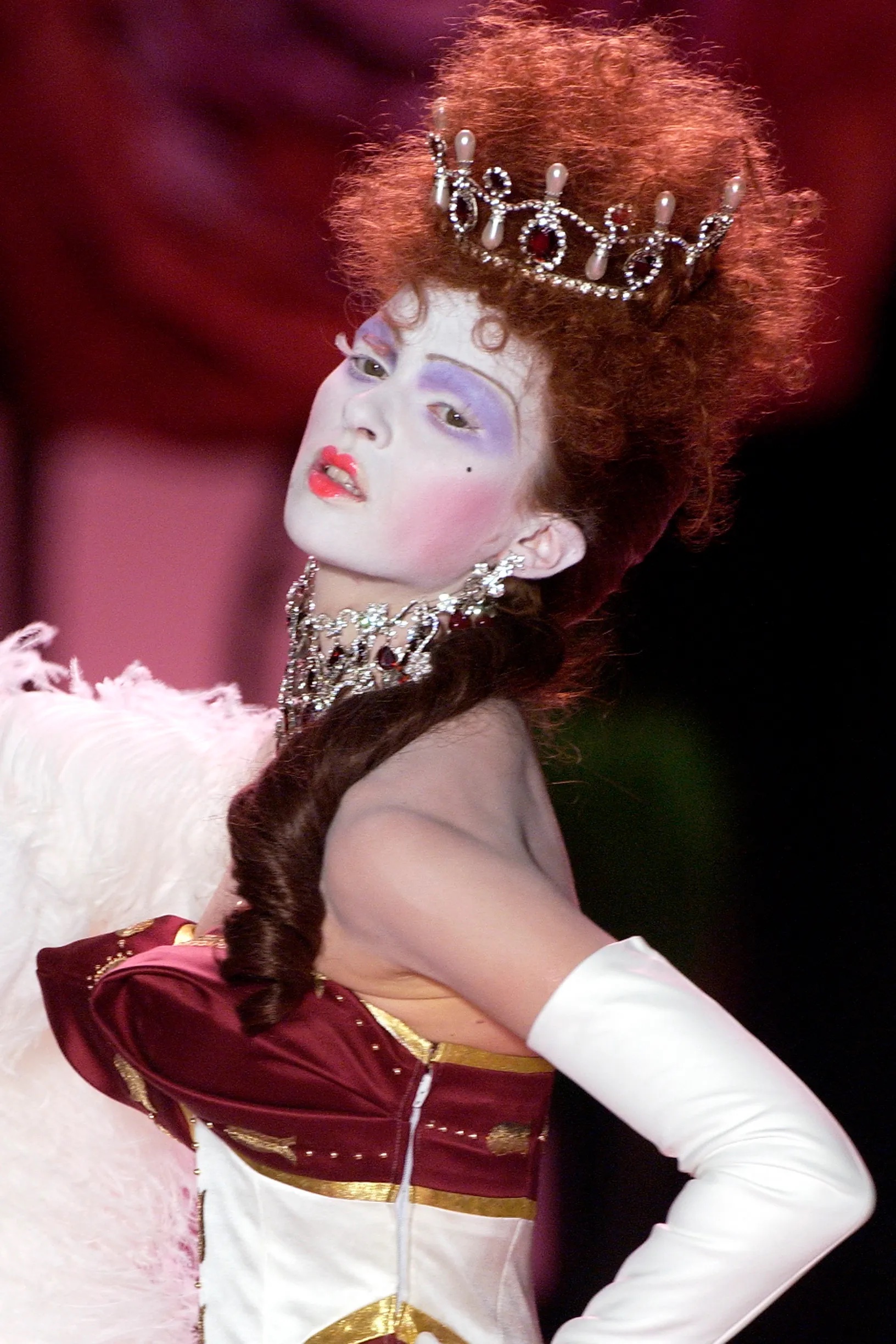
As for the glam, McGrath took a different approach than previous Dior shows. Of course, it was still bold, with each model donning a tousled pile of chestnut-colored curls, paying homage to Sisi’s famous locks. However, deviating from her signature use of sparkle, she covered each of the model’s faces in a heavy layer of white matte powder.
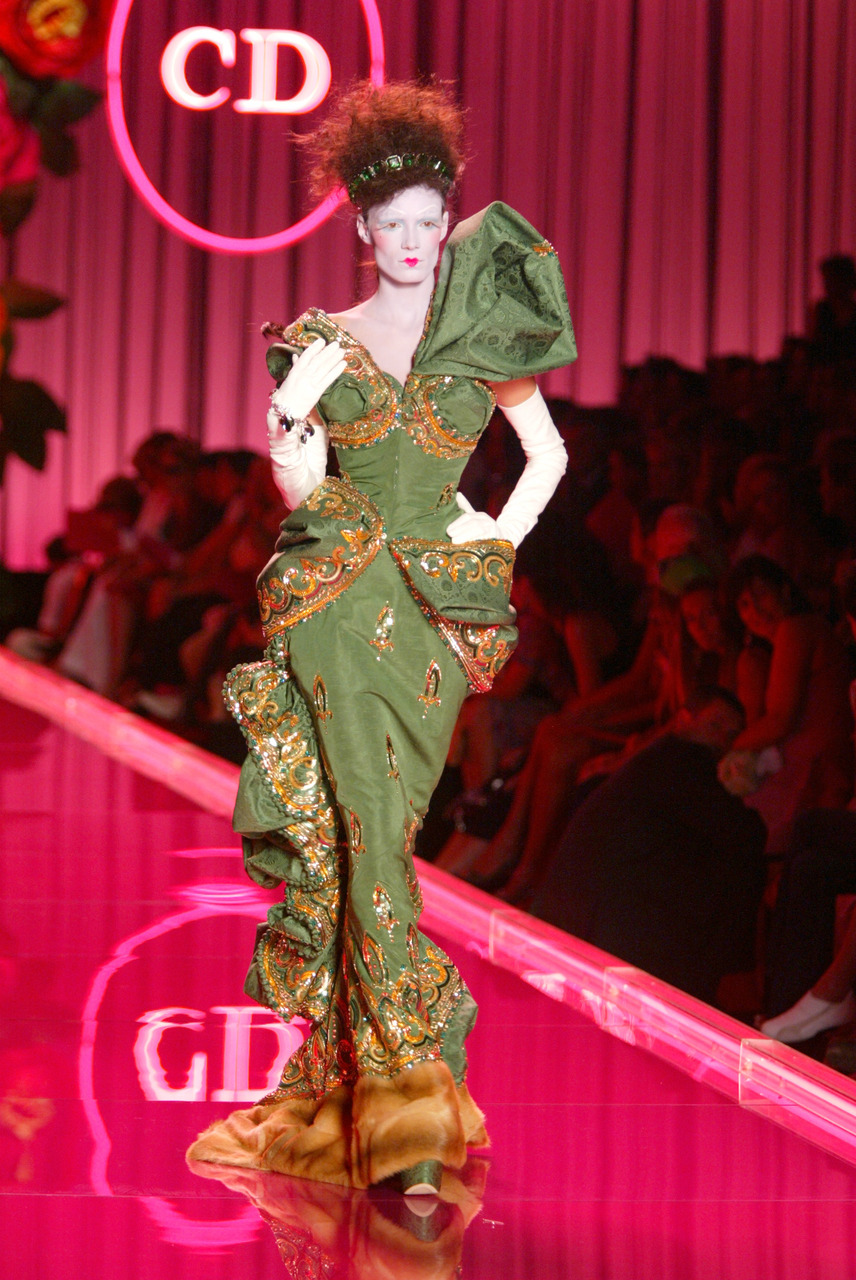
From there, McGrath coated their lashes in white mascara, painted on pencil-thin brows, and added a generous flash of hot pink blush to their cheeks. To top it off, she added small heart-shaped lips over the models’ natural lip line and a beauty mark.
At first glance, this look may remind many of Marie-Antoinette, whose reign was many years prior in the late 18th century, as opposed to Sisi. However, like Sisi, Marie-Antoinette was a member of the Habsburg family, born an archduchess in Austria before becoming Queen of France.
In many of her stylized portraits, she is portrayed as having tiny, doll-like lips. Historical accounts and more historically minded paintings actually reveal that she had a more pronounced lower lip. This was a genetic mark of her Habsburg ancestry, known as “Habsburg lip” or “Habsburg jaw”, which can be more prominently seen in portraits of other Habsburg rulers, such as Philip IV and Charles II of Spain.
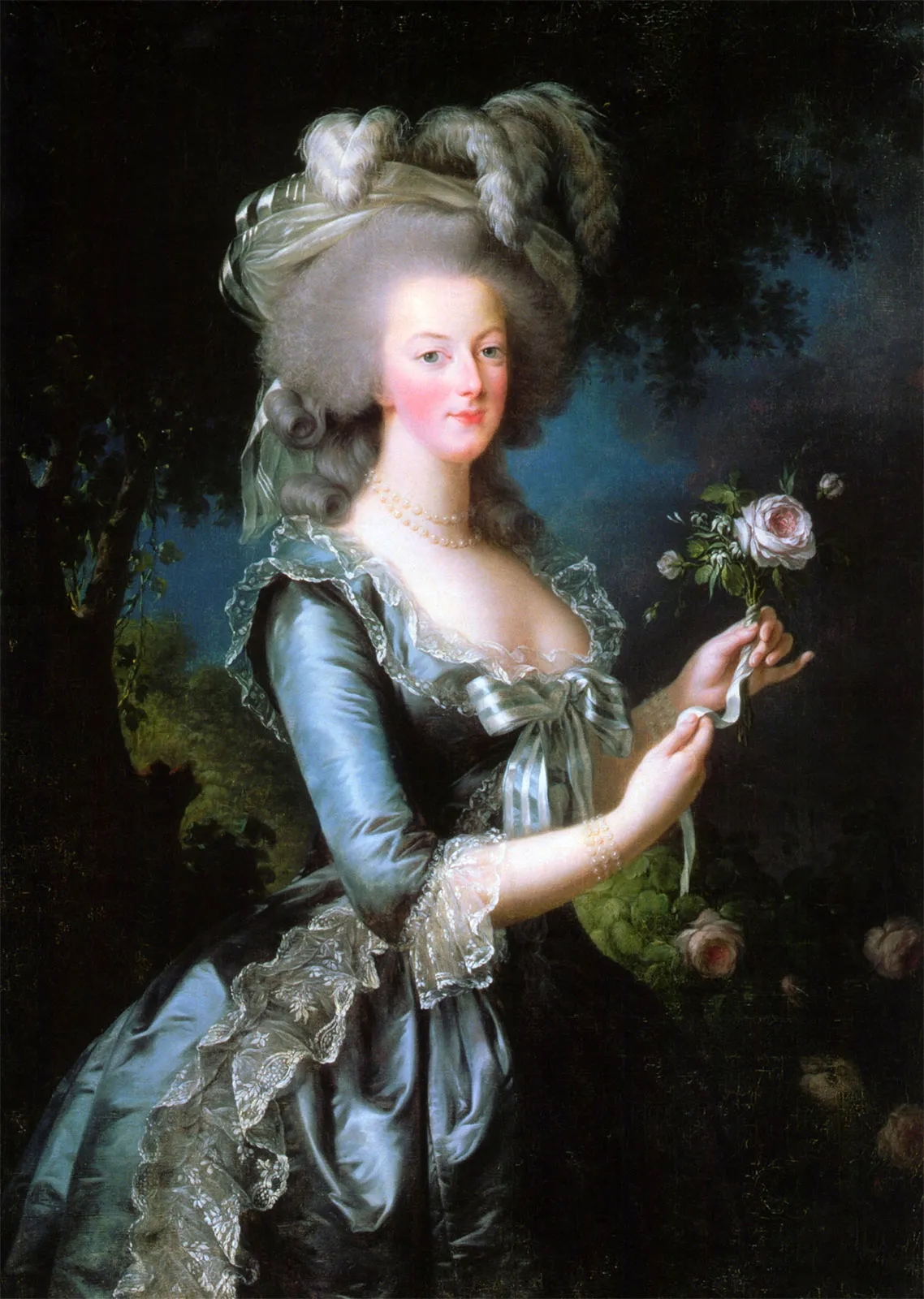
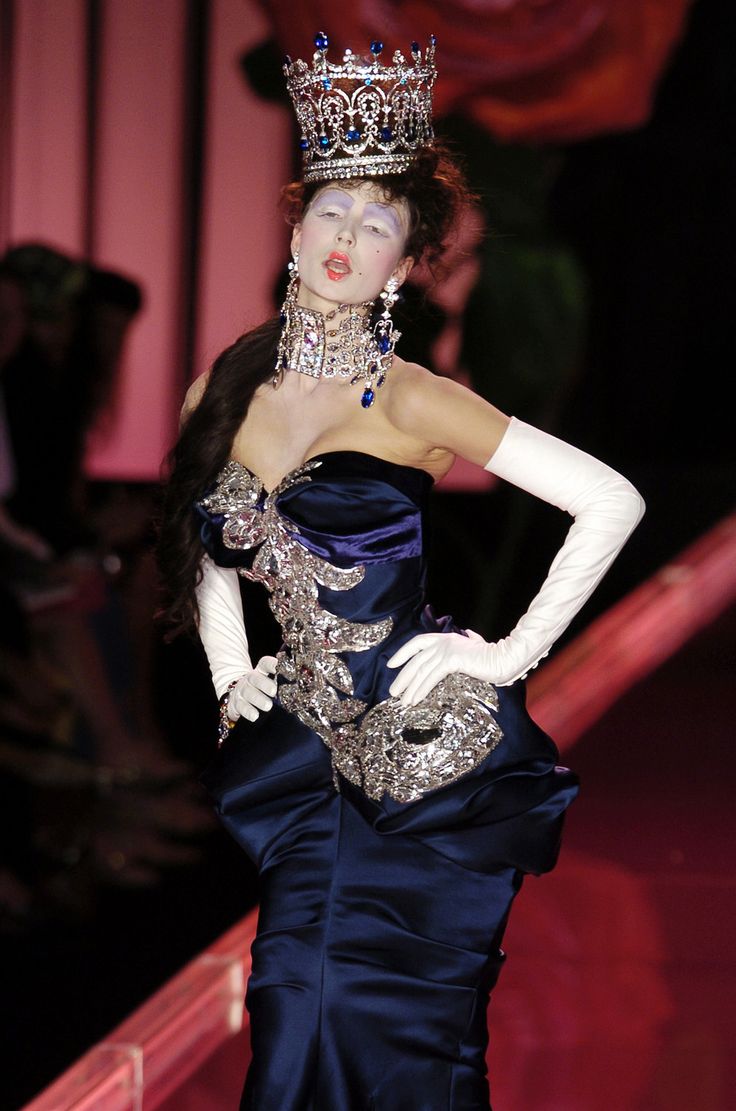
With this Marie-Antoinette makeup, it can be assumed that McGrath not only wanted to match the grandeur of the clothes, as Sisi’s own makeup was far too demure in comparison, but also to reference the Austrian empress’ ancestry. In doing so, she not only retained the theatricality of Galliano’s Dior but transformed the models into fin-de-siecle princesses, each fighting for attention as they traipsed down the runway, captivating the audience with every step.