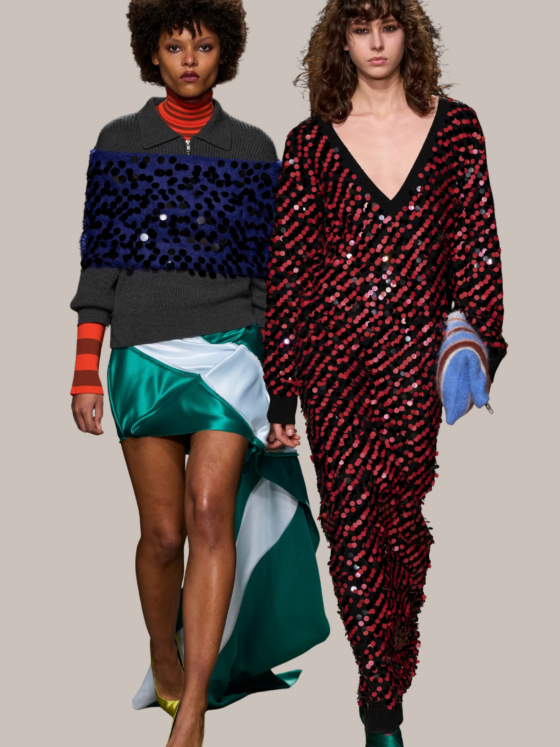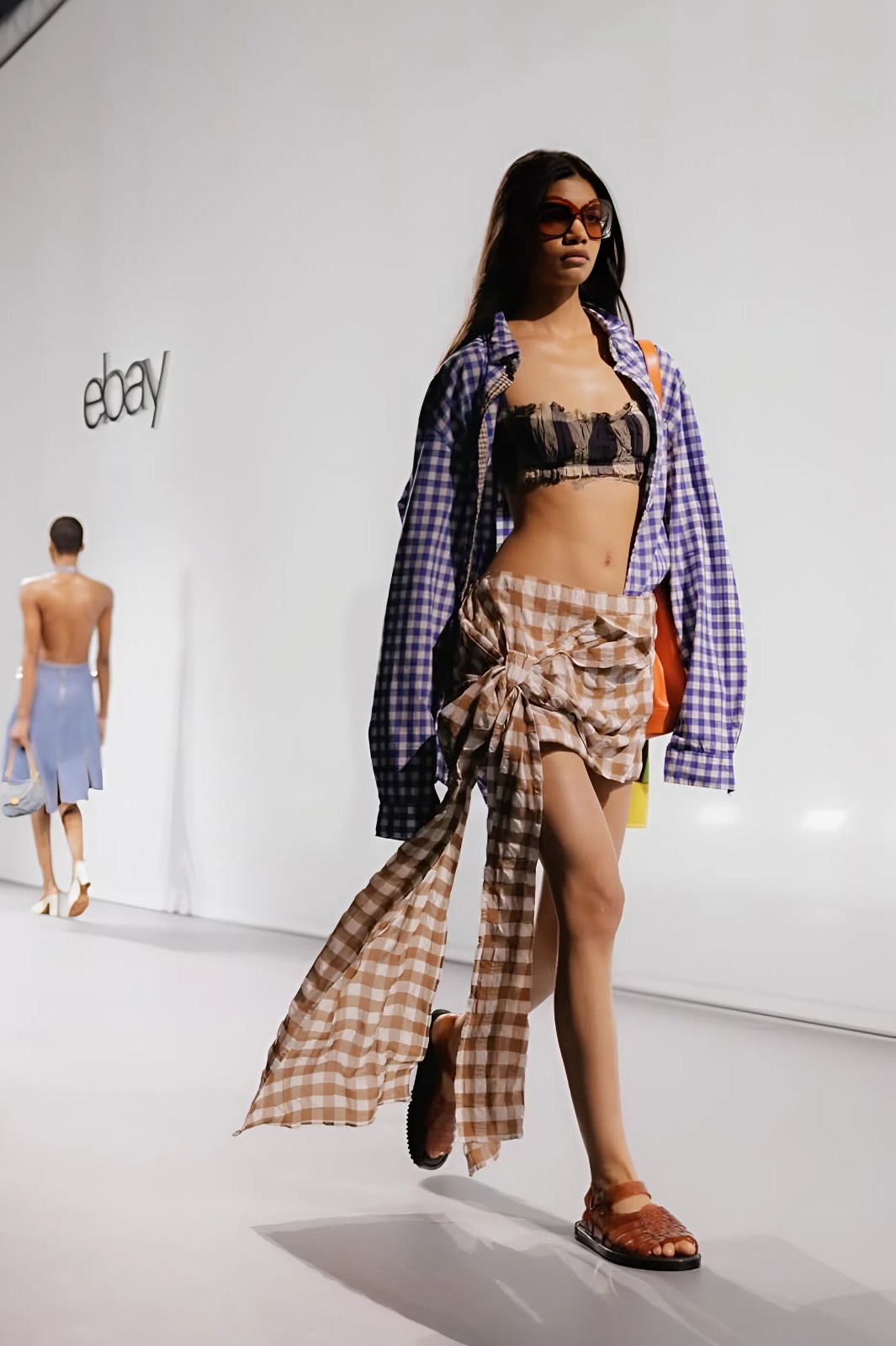
London, 6 p.m., and the city was tuned in. The room was grey, minimalist, with a silver eBay sign visible in the background. Then came the models: bold, clear against the muted space, their looks streaming live across the world. This was Endless Runway, eBay’s collaboration with the British Fashion Council, and it felt like a landmark moment for pre-loved fashion.
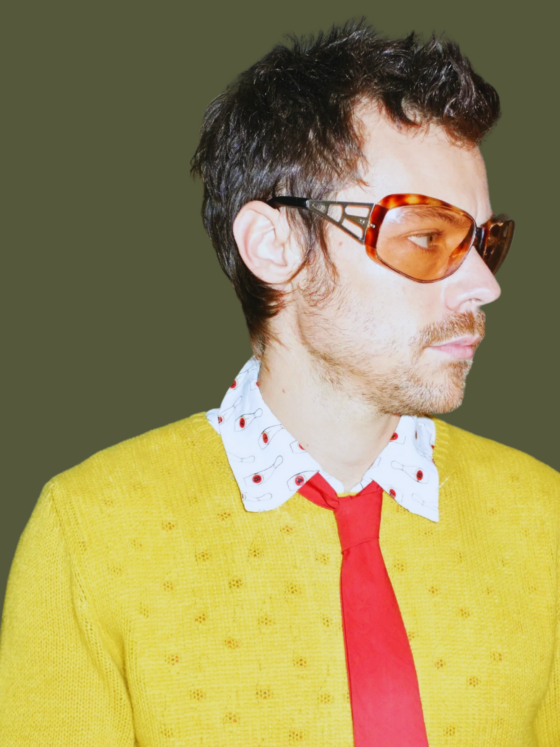
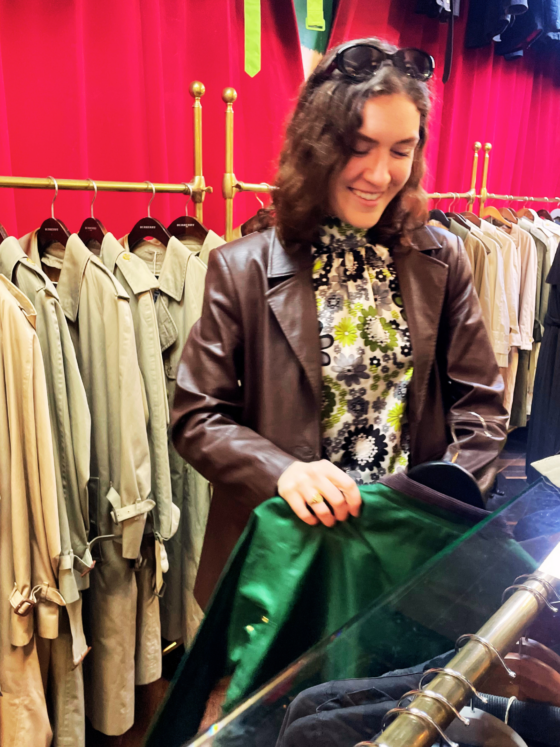
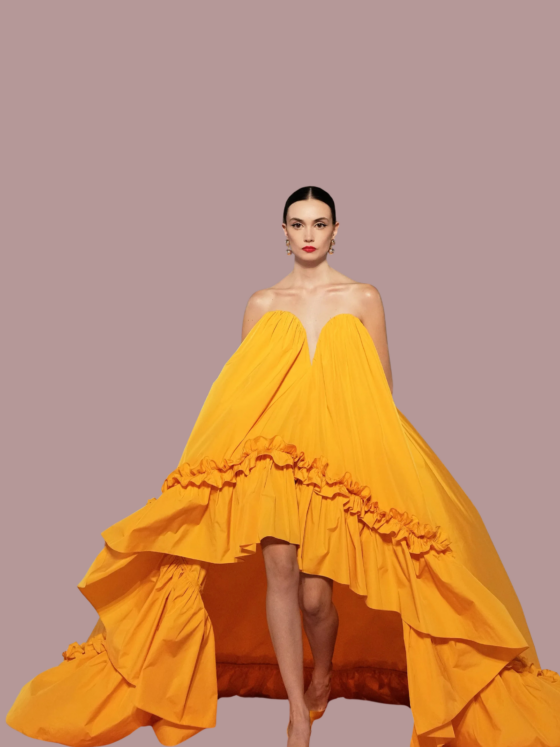
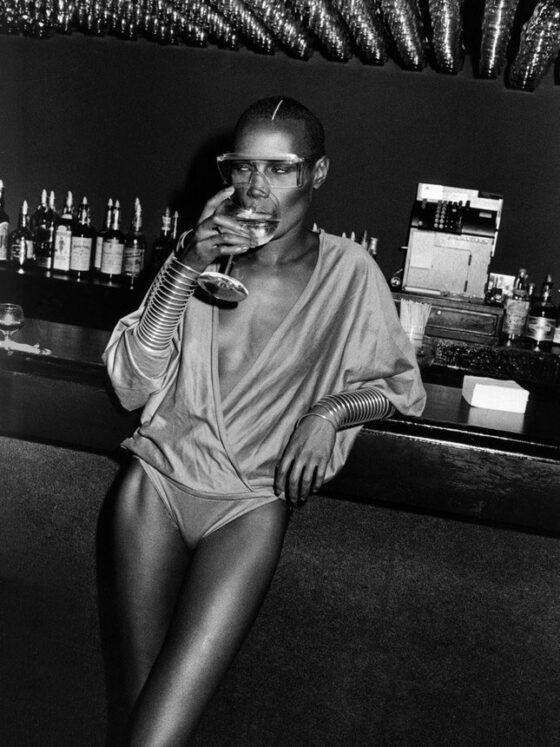
Curated by eBay’s Pre-Loved Style Director Amy Bannerman and hosted by Amelia Dimoldenberg, the show mixed fun with flair. The pieces were a time capsule of style: archival Vivienne Westwood from the ’90s, flamboyant Molly Goddard, pre-loved Christopher Kane, and even trousers from Alexander McQueen. Nothing looked dated. Denim appeared reimagined, corsetry returned in playful cuts, and tailoring softened into relaxed, layered silhouettes. Watching it live, you could almost feel the energy of the front row.
And here’s the twist: if you spotted something you loved, you could buy it directly on eBay in that moment without any fantasy barrier, or waiting list, just immediacy. A pair of trousers goes down the runway, you tap into the app, and they’re gone. It felt like an auction, but with more rhythm: “going once, going twice” turned into swipe and secure.
The idea of recycling is usually framed around raw materials, plastic melted down, and metal repurposed. Endless Runway flipped that: it wasn’t just about the fabric, it was about the item itself. A handbag is once carried on someone’s arm. A jacket with light fading on its exterior. Earrings with scratches on the hardware, sold transparently with photos and condition notes. These pieces weren’t new, but they carried stories, and in fashion, stories are currency.
It reminded me of cars or art: a Ferrari once owned by a star suddenly becomes priceless, not because of the horsepower, but because of its history. Here, it was the same logic, clothes appreciated not despite their wear, but because of it. Someone could walk away saying, “These trousers? They once belonged to Madonna.” That’s a value you can’t manufacture.
This was more than a moment — it was a message. By partnering with the British Fashion Council, eBay solidified secondhand fashion’s place within the heart of fashion week itself. As Vogue Business noted, it signaled that pre-loved is now mainstream, not a sideshow. The Guardian called it a “monumental moment” for circular fashion. And rightly so: instead of ending up in landfill, these garments found new homes — or even walls — becoming as collectible and revered as art.
For me, the set design was everything. The pared-back grey minimalism allowed the clothes to breathe – silhouettes popped, colours sharpened, textures glowed. And post-runway, Dimoldenberg’s signature charm kept things light and entertaining, proving this fashion is meant to be lived in, not just admired.
Endless Runway wasn’t only innovative, it was affirming. It showed us that secondhand fashion isn’t second best. Its history is re-worn, design rediscovered, beauty recycled. And in a world oversaturated with “new,” something is thrilling about the idea that the most stylish thing you can wear is a story that’s already been told.